


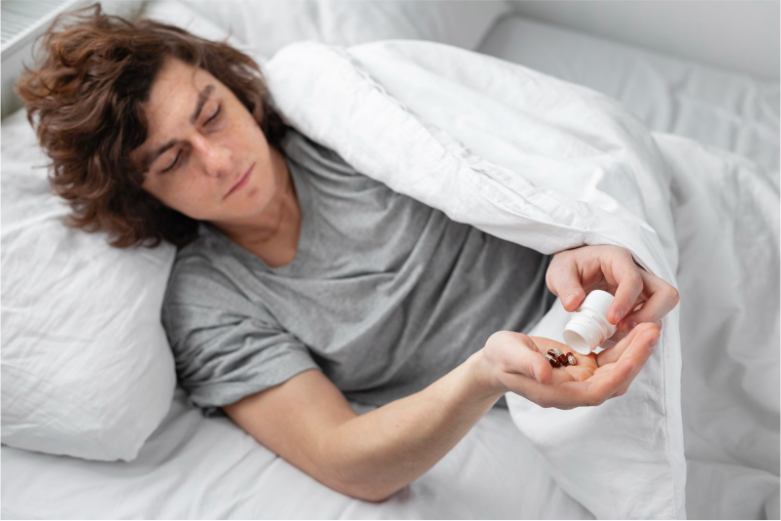
Life without proper sleep can be frustrating and quite dangerous for your mental and physical health. Doctors recommend that adults should get at least 7 to 9 hours of unerupted every night for smooth functioning.
Yet, most people miss out on it due to underlying diseases, injury pain, long working hours, stress, and many other life factors. Poor sleep not only increases the risk of heart disease but also leads to weight gain, weakening of the immune system, memory issues, poor coordination, slow reaction time, and even depression.
That’s why the demand for natural sleep aids like melatonin and CBD gummies for sleep has shot up in the last few years. But which one should you opt for? How do they work, if these questions trouble you, then this article is all you need to read.
What is CBD?
CBD (Cannabidiol) belongs to the family of naturally occurring plant compounds known as cannabinoids. There are more than 110+ cannabinoids in cannabis plants, but to date, CBD remains the most studied and widely used one. Over-the-counter CBD products like gummies and oils that are available in the market are made using extracts of industrial hemp plants.
As per the 2018 farm bill, CBD hemp-derived CBD products can not have more than 0.3% THC (Tetrahydrocannabinol) in them. THC is also a cannabinoid like CBD, but it’s highly intoxicating, hence its limit is capped to such trace levels.
Marijauna-derived CBD products are also available in some states legally, but to buy them you must be suffering from severe health conditions and be a part of the respective state’s medical marijuana program.
CBD is preferred because it works well with the human body, and does not cause any severe harm effects. Even if you take too much accidentally, it won’t bring any severe side effects, and it’s quite hard to overdose on it. It’s clinically proven for its nerve-calming, stress-reducing, appetite-stimulating, and pain-curbing effects on the human body.
How does it work?
CBD works by improving the efficiency of the Endocannabinoid system. It’s a complex cell signaling network and consists of endocannabinoid receptors like CB1 and CB2, which are spread throughout the model.
These receptors work by interacting with two internal cannabinoids – Anandamide and 2 AG. The interaction creates a balance in the body by controlling our stress, anxiety, pain, appetite, circadian rhythm, immunity, memory, and tons of other crucial biological functions. In this process, internal cannabinoids break down and sometimes this creates an imbalance.
CBD bridges that gap, and allows this function to continue working efficiently. It slows down the speed of internal cannabinoid breakdown, which leads to better anxiolytic, analgesic, and anti-inflammatory effects.
Plus, it increases the amount of anandamide produced in the body, and since anandamide modulates dopamine sensors in the brain, we feel more comfy, relaxed, and in a better mood. As a result of this, the chances of getting better sleep increases.
After all, stress and anxiety are the biggest culprits behind poor sleep, and CBD simply takes care of both by improving the working of the endocannabinoid system. Also, it brings down cortisol levels and positively affects the regions in the brain that are crucial for maintaining the body clock.
So yeah, that’s why it’s said that one CBD gummy few hours before bed can help you experience a deep and fully restoring sleep cycle. There are many studies out there where people suffering from insomnia saw tremendous improvement in their sleep after adding CBD to their wellness routine.
What is melatonin?
Ever noticed how you start to feel sleepy once the clock hits a certain time and lights go dim in the room? That’s melatonin telling your body that it’s time to sleep now. It’s a natural hormone made by put pineal gland. It helps the body to maintain its internal clock and sleep rhythm.
But, thanks to how everyone is in front of screens all the time, melatonin production gets disrupted. Plus, having coffee a few hours before bedtime, traveling to different time zones, and getting too much stimulation also negatively impact melatonin production.
Another factor behind low melatonin is aging, that’s why you’ll notice that elderly people have much more disrupted sleep-wake cycles, and they often struggle to sleep on time.
How does melatonin work?
Melatonin works by controlling our sleep-wake cycles, it signals the body when it’s the right time to sleep. But, since most of us have poor sleep hygiene, our melatonin production also takes a hit. That’s why companies have started selling it in the form of gummies.
Just take one 30 minutes before usual bedtime, and it will naturally guide your body to slide into a deep restful sleep. Those who have insomnia, ADHD, Hypopnea, and other such sleep-disturbing conditions are often recommended to take 3-10mg of melatonin every night.
Which one is better for sleep? CBD or Melatonin?
Well, both are quite good, and it all boils down to your individual needs. If you have poor sleep due to anxiety, stress, and body aches, then CBD gummies are a better option. But, let’s say you are generally healthy and suffering from poor sleep due to travel, or poor work-life balance, then maybe melatonin will be a better option.
It’s best to try both for a few days and stick with what works best for you. Also, don’t increase your dosage suddenly, give your body some time to adjust to these compounds and gradually adapt.
Our Final Thoughts
To sum it up, it wouldn’t be right to say that CBD is better than melatonin or vice versa. Both have their unique working mechanism and scientifically proven data that they do make your sleep quality better.
So instead of getting infused between one over the other, why not buy gummies that have both of them? Colorado Botanicals has these deep sleep gummies which have both CBD and melatonin in them along with other calming ingredients like lemon balm, passion flower, L-theanine, CBN, and Chamomile.
It’s a broad-spectrum formulation, so you can take them even if you have a blood test coming. Just make sure to start slow, and increase your water intake to dial down any risk of nausea.
