


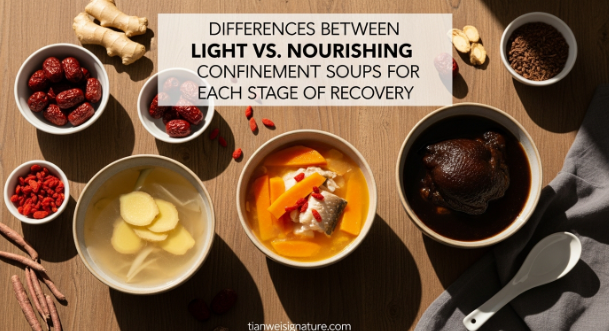
When you are freshly postpartum, confinement soups can feel like both comfort and confusion. Should you take something light, or go straight for a more nourishing bowl? If you are an expecting parent in Singapore planning your confinement food, knowing the difference matters because your body’s needs change quickly from week to week.
The right soup for confinement is less about following a single “best recipe” and more about timing. In traditional practice, postpartum recovery is often approached in stages, with lighter soups first, then progressively richer ones as digestion, energy, and appetite return.
Confinement Soups: what “light” vs “nourishing” really means
A light confinement soup is typically easier to digest and gentler on a recovering stomach. It often focuses on warmth, hydration, and supporting the early recovery process when the body is still clearing lochia and inflammation is settling.
A nourishing confinement soup is richer, with more tonifying ingredients and heavier proteins. It is usually introduced later, when the body is ready to rebuild strength, replenish blood and energy (Qi, in TCM terms), and support longer-term recovery.
In simple terms, light soups help you stabilise first. Nourishing soups help you restore next.
Why stage-specific soups matter (especially for first-time parents)
In TCM, childbirth is seen as a major event where a mother loses significant Qi and blood. That is why the confinement period is structured, rather than treating every day the same.
From a nutritional point of view, soups can be a practical way to get easily digestible protein and collagen-containing ingredients that support tissue repair, especially after a c-section or an assisted delivery.
For first-time parents, the bigger issue is often decision fatigue and logistics. When there is no one to cook, having stage-appropriate soups planned for you can remove a daily stressor at the exact time you have the least bandwidth.
Stage-by-stage guide: which soup type suits each phase
Stage 1 (Days 1 to 10): Light, warming, and clearing
This is when many mums feel sore, swollen, and easily “jelak” (overwhelmed by rich food). Traditionally, the focus is on supporting uterine recovery and encouraging the body’s natural clearing process.
Common characteristics of lighter soups in this stage:
- Clear broth, minimal oil
- Warming aromatics like ginger
- Gentle herbs used in confinement traditions
A well-known example is sheng hua soup, traditionally believed to support postpartum uterine recovery and lochia clearance. Because every body is different, it is best treated as part of a stage plan, not an everyday blanket solution.
Practical tip: if you feel bloated or nauseous, this is usually not the time for very rich, slow-cooked herbal chicken tonics.
Stage 2 (Days 11 to 20): Transition soups that rebuild without “overdoing it”
Once appetite improves and your digestion feels steadier, many families shift to moderately nourishing soups.
What changes in this stage:
- More protein (chicken, fish, lean pork)
- A slightly richer mouthfeel
- Herbs that are traditionally believed to help rebuild Qi and blood
If you are breastfeeding, this is also when some parents start paying closer attention to ingredients used in meals. At Tian Wei Signature, we use garlic, ginger, fenugreek, and green papaya in selected dishes because they support breast milk supply, while keeping flavours appetising and mum-friendly.
Stage 3 (Days 21 to 30+): Fully nourishing soups for strength and long-term recovery
Later confinement is where many mums want to feel more like themselves again, with better stamina and fewer aches.
Nourishing soups here are often:
- More collagen-rich (for example, pork cuts with connective tissue)
- Deeper herbal profiles
- Designed to support sustained energy and rebuilding
In traditional practice, ingredients such as astragalus, codonopsis root, goji berries, black chicken, or bone-supporting herbs may appear in this stage. These are traditionally believed to tonify Qi, blood, and the kidney systems.
If you are unsure what fits your stage, Tian Wei Signature’s herbal soups are reviewed by Ma Kuang TCM, specifically for the herbal soup component (not the entire menu). You can browse the range and learn how they are typically positioned by stage by checking out the details here.
Quick comparison table: light vs nourishing soups by recovery stage
| Recovery stage | What your body often needs | Better soup style | What to watch for |
| Days 1 to 10 | Hydration, warmth, gentle digestion | Light soups | Too much oil, very rich tonics |
| Days 11 to 20 | Rebuilding energy and blood, steady appetite | Moderately nourishing | Overly strong herbs if you feel heavy |
| Days 21 to 30+ | Strength restoration, deeper nourishment | Nourishing soups | Overeating, too many tonics at once |
Common myths that can derail your soup plan
Myth 1: You must avoid all fruits and vegetables because they are “cooling”
Modern nutrition recommends that half of a balanced diet include fruits and vegetables, which can help meet fibre needs and relieve constipation during recovery.
If you are concerned about “cooling” foods, many families pair vegetables with warming ingredients, such as ginger, in cooking, rather than cutting them out completely.
Myth 2: Rice wine and strong alcohol-based tonics are a must
Alcohol can pass into breast milk. If you are breastfeeding, consider limiting or avoiding alcoholic tonics, and speak to a qualified professional if you are unsure what is appropriate for you.
Myth 3: More nourishing is always better
More is not always better, especially in the first week. A confinement soup that is too rich too early can leave you feeling bloated, heaty, or put off food entirely, which makes it harder to eat enough overall.
Where Tian Wei Signature fits: variety, structure, and convenience (without losing tradition)
Some parents worry confinement food will feel repetitive, overly herbal, or simply not enjoyable. Tian Wei is built for parents who want tradition, but also want to look forward to meals.
What you can expect:
- A menu concept that blends traditional Chinese comfort with modern variety, with fusion dishes starting from week 2
- Breastfeeding-friendly ingredients included thoughtfully (garlic, ginger, fenugreek, green papaya) to support breast milk supply
- Two daily deliveries (lunch and dinner)
- Service flexibility that lets you book now and activate later
And yes, you can still enjoy real dish variety alongside your soups, such as Coq Au Vin, Seared Salmon with Cauliflower Cream, and Braised Pork Trotter in Black Vinegar, depending on your plan and stage.
If you are comparing confinement soups Singapore providers, prioritise those that clearly separate early-stage lighter broths from later-stage nourishing tonics, and can match portions and flavours to your appetite.
How to choose the right confinement soup when you do not know your delivery outcome yet
Many expecting parents plan for a normal delivery, then end up with an unplanned c-section, or simply feel very different than expected.
A practical way to plan is:
- Start with a Week 1 approach that stays light and gentle.
- Build in a Week 2 transition that adds protein and warmth.
- Keep Week 3 and 4 for deeper nourishment when appetite is stronger.
If you ever feel persistently overwhelmed, anxious, or low after birth, seek medical attention promptly. Postnatal mental health is serious and deserves professional care.
When you are ready to lock in your schedule (especially if you want the flexibility to activate later), you can check availability and booking details here.
Confinement soup should never feel like a guessing game. Book 1 month before your EDD and enjoy an early bird discount.
