
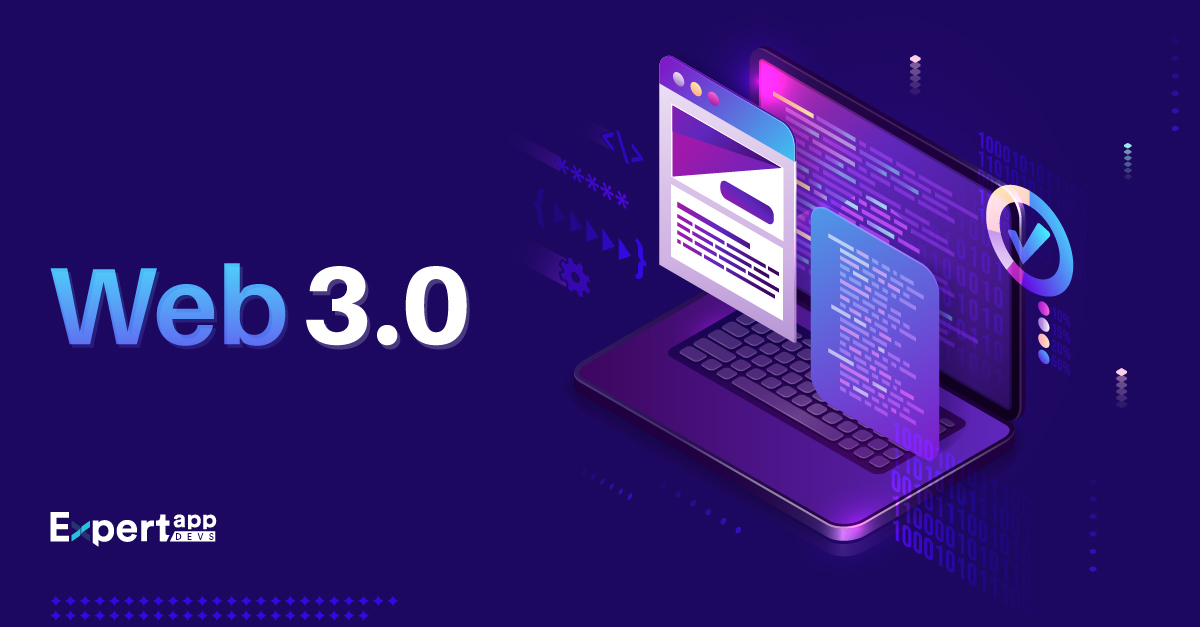
Since Web 1.0, we’ve witnessed the growth of the World Wide Web (www). Once, it was only capable of rendering static websites that only included texts and visuals. Then, in the early 2000s, the rise of Web 2.0 brought social media platforms to the spotlight. Web 2.0 was a massive upgrade from Web 1.0 because it made the Internet more useful and interactive.
Now, Web 3.0 is just a leap away from making the Internet more intelligent, decentralized, and secure.
But, what’s so great about Web 3.0 that it has become the talk of the town?
Well, read on if you want to know how Web 3.0 is going to change the world of the Internet.
What is Web 3.0
Why We Need Web 3.0?
How Web 3.0 is Different
Advantages of Web 3.0
Limitations of Web 3.0
Key Takeaways
What is Web 3.0:
Web 3.0, or Web3, marks the third generation of the World Wide Web. Unlike its predecessors, Web 3.0 is totally decentralized; it means that the people will be in charge of their data instead of big data companies.
One important building block of Web 3.0 is blockchain technology. Web 3.0 is going to use blockchain ledgers to transparently save the data. As it’s a decentralized system, these digital ledgers will be accessible to all.
The use of semantic web is another highlighted feature of Web 3.0. Through the semantic web, our search engines will better understand our queries and . become fast, reliable, and efficient.
Moving on, let’s see if we really need a new World Wide Web.
Why We Need Web 3.0?
Here, I will list down some drawbacks of Web 1.0 and Web 2.0 so you may know why we need Web 3.0:
Web 1.0:
- Limited user-interaction
- Static webpages and offered one-way communication; from source to users.
- Website owners controlled the data.
Web 2.0:
- Extensive data collection practices by most companies raised privacy concerns.
- Users had limited exposure to personalized content.
- Provided better online security than Web 1.0, but still vulnerable to viruses and security threats.
How Web 3.0 is Different?:
To understand how Web 3.0 is different, let’s compare it with Web 2.0, the second generation of the World Wide Web.
| Web 1.0 | Web 2.0 | Web 3.0 | |
| Goal | Information Sharing | Community engagement and interaction. | Giving individuals more power by decentralization. |
| Main Focus | Delivering information to users via readable, static web pages. | Enhancing user experience by flooding the web with different tools and applications. | Focused on securing user privacy and making the web more secure |
| Supported Applications | Online directories, emails. | Web Applications | AI and ML-based applications. |
| Data Ownership | Webmasters (people or companies who owned the websites) | Private networks and big data companies’ ownership. | Data ownership and its use belong to different entities. |
| Contributing Technologies | Web and File servers, HTML | Web development languages like AJAX, Javascript, HTML5 | AI and ML |
| Advertising | Banner advertising | Capturing eyeballs with interactive and engaging content | More focused on consumer behavior. |
| 3D Graphics and Visuals | No | No | Yes |
Now, let’s see how Web 3.0 can benefit us.
Advantages of Web 3.0:
- Data ownership will allow us to decide what information we want to share.
- Decentralization will reduce the number of intermediaries. There will be few or no central authorities taking a cut of your online transactions.
- People may easily track data and see the site’s source code before using it.
- Search engines will become more intelligent and effective.
As websites will be able to see our content preferences, we may have a personalized web surfing experience.
Web 3.0 has the potential to resist security threats. However, Web 2.0 is still in use, and it does not have the same ability. For a safe browsing experience on Web 2.0, installing a firewall and using a reliable internet service provider (ISP), for instance, Spectrum is recommended. Spectrum’s gateway can help prevent malware or viruses from entering your system. For more information, you can contact their 24/7 customer support via Spectrum customer service number.
Lastly, let’s discuss some cons of Web 3.0 that are yet to be addressed.
Limitations of Web 3.0:
- Web 3.0 may not expand until devices’ capabilities are increased.
- Websites made on Web 1.0 may stop working altogether after Web 3.0 is fully rolled out.
- As it’s decentralized and anyone can access data, its management may be a problem.
- Beginners may need a lot of time to get a hold of Web 3.0.
Key Takeaways:
- Web 1.0 offered limited user interaction.
- Web 2.0 provided limited personal exposure to the users.
- Unlike Web 1.0 and Web 2.0, Web 3.0 is a decentralized platform.
- Web 3.0 uses blockchain technology, along with artificial intelligence (AI) and machine learning (ML).
- Semantic web is a key feature of Web 3.0. It will make the web more intelligent and improve query results.
