


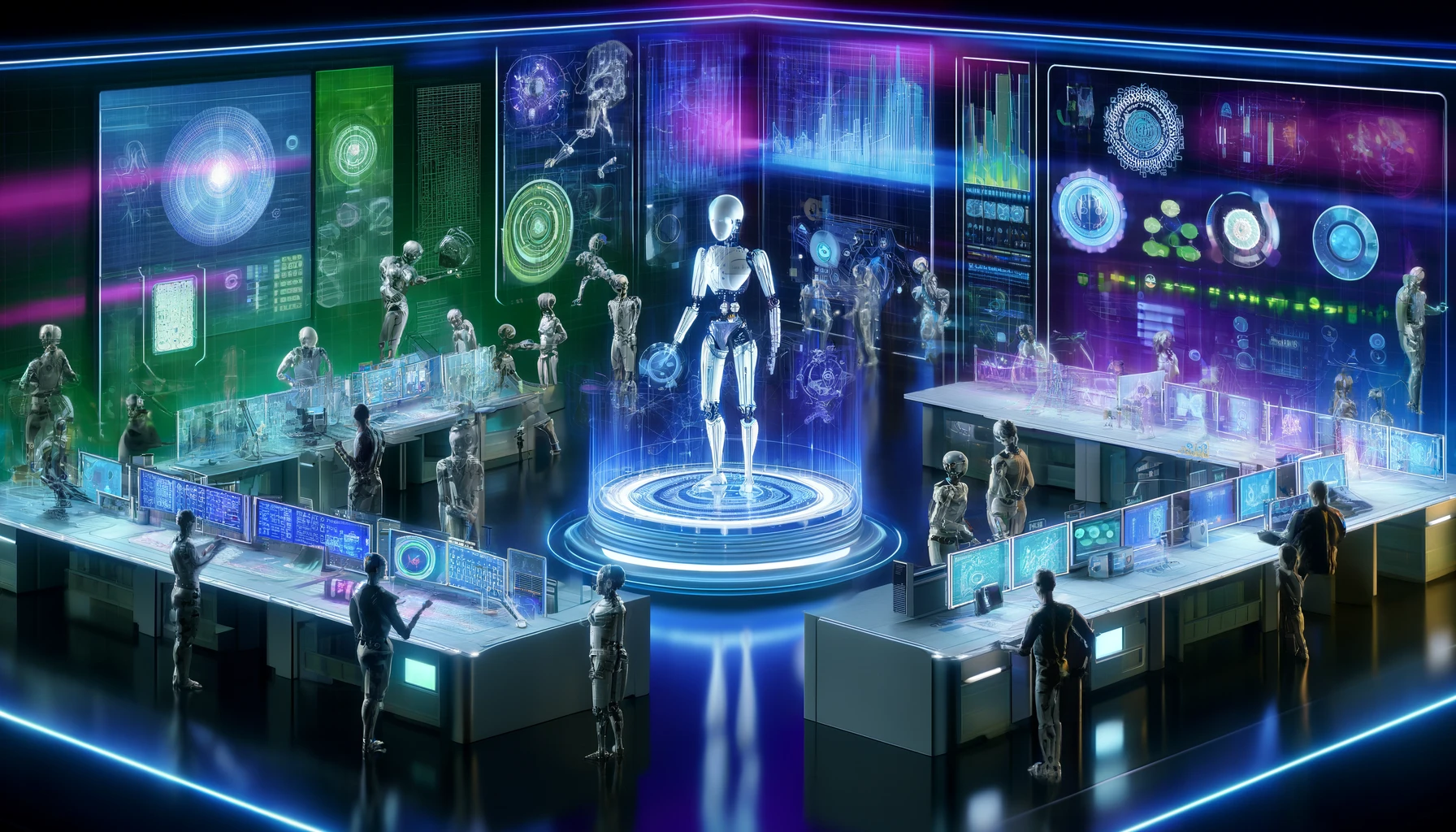
Artificial Intelligence (AI) has transformed industries, streamlining processes and making advanced technology accessible. A key development in AI is the creation of agents—autonomous systems designed to learn, adapt, and perform tasks efficiently. With growing demand, understanding how to build these agents effectively has become essential for businesses and tech enthusiasts. This guide outlines proven techniques to design efficient AI agents in an engaging and approachable way.
The Foundation: Understanding AI Agents
At their core, AI agents are systems capable of perceiving their environment, processing information, and taking action to achieve specific goals. Understanding how to build an AI agent involves integrating multiple technologies, including machine learning, natural language processing, and robotics. To build a robust AI agent, developers must focus on designing a system that is intelligent, adaptable, and scalable.
Start with Clear Objectives
Efficient AI agents are purpose-driven. The development process begins with defining the agent’s primary objective. Whether it’s a customer service bot, a recommendation system, or a task automation tool, clarity in purpose shapes the entire design.
Developers must map out specific tasks the agent will handle and outline measurable outcomes. For example, an AI assistant built for customer service might aim to resolve user queries within a set time frame while maintaining a high accuracy rate.
Leveraging Data: The Backbone of AI Agents
Data is crucial for AI agents to learn and improve decision-making. Developers should collect diverse datasets and preprocess them to ensure consistency and relevance. Using both labeled and unlabeled data is key. Labeled data enables structured learning, while unlabeled data helps the AI agent adapt to varied tasks, ensuring efficiency in real-world scenarios.
Design with Scalability in Mind
As technology advances, user demands grow. Building scalable AI agents ensures they remain effective over time. It allows components to be updated or replaced without disrupting the system. For instance, separating natural language processing from decision-making lets developers refine each part independently, reducing downtime and boosting adaptability.
The Role of Automation in AI Agent Development
Automation is critical to improving the efficiency of AI agents. Integrating automated tools during the development process reduces manual effort and accelerates progress. These tools often assist in model training, data processing, and performance monitoring. By automating repetitive tasks, developers can focus on refining core functionalities. This speeds up development and ensures the final product is more precise and efficient.
User-Centric Design: Bridging AI and Real-World Applications
AI agents should prioritize user-centric design to ensure they deliver value intuitively and seamlessly. Simplicity in interaction is essential, especially for non-technical users. Clear interfaces and communication build trust and engagement. For example, chatbots with conversational language and user-friendly designs often lead to higher satisfaction.
Understanding how to build an AI agent requires a blend of technical know-how, strategic planning, and user-focused design. By setting clear objectives, leveraging high-quality data, designing scalable systems, and incorporating automation, developers can create AI agents that meet both current and future demands. In a world where AI continues to drive innovation, building efficient agents is a stepping stone toward unlocking the true potential of artificial intelligence. When done right, these systems can transform industries and improve everyday experiences, making them an essential tool for modern problem-solving.
