


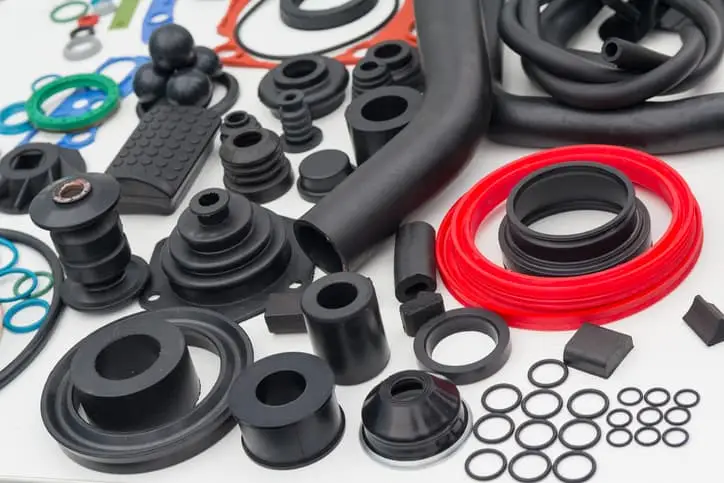
Manufacturing rubber parts with complex shapes and precise tolerances requires a method that delivers both accuracy and repeatability. One technique stands out for its ability to meet these demands with consistency across large production runs. It has become essential in industries such as automotive, aerospace, and medical technology, where dependable part geometry is critical to performance and safety.
Precision in Dimensional Tolerances
When working with rubber parts that require detailed features, achieving consistency in every unit is critical. Even minor variations can affect the overall functionality of seals, gaskets, or vibration dampeners. Rubber injection molding addresses this challenge by ensuring every part is formed within a tightly controlled environment. This allows for the creation of identical parts over extended production runs without deviation in quality or fit.
Tolerances are especially important in components that interface with metal or plastic assemblies. Uneven surfaces or size discrepancies can lead to failures in performance, particularly in environments that experience fluctuations in pressure, heat, or chemical exposure. Maintaining uniformity across parts not only ensures functionality but also enhances product safety and durability.
Suitability for Detailed Part Designs
Parts featuring grooves, ridges, hollow cores, and other complex characteristics demand a high level of accuracy. Achieving such fine detail in rubber components requires precise alignment of material and mold design. This level of detail becomes achievable without compromising on reliability. The method supports tight angles, undercuts, and variable thicknesses in a single part.
These features are common in critical applications, such as engine components or medical valves, where a smooth and accurate interface is essential for operation. The ability to form these features with minimal variation offers engineers greater design freedom while maintaining structural integrity. This is particularly useful for reducing the number of assembled parts in a device. Engineers can design one complex part instead of multiple simple ones, cutting down on assembly time and potential failure points.
Rubber Types for Specialized Needs
Choosing the right rubber material plays a key role in delivering parts that meet specific performance standards. Depending on the application, materials may need to resist oil, UV rays, abrasion, or chemical corrosion. This molding method supports a variety of high-performance compounds, each tailored to withstand different stresses.
Fluorocarbon rubber, for instance, excels in high-temperature and chemically aggressive settings. Silicone, on the other hand, offers excellent flexibility and biocompatibility. The versatility in material selection allows for precise matching of a rubber’s properties to its intended function. Different rubber types behave in unique ways during shaping and curing, but this technique ensures these behaviors are managed with care. This contributes to the delivery of parts that are not only functional but also long-lasting under demanding conditions.
Ideal for Industry-Specific Applications
Several industries rely on rubber components that demand accuracy, durability, and resistance to harsh environments. In automotive manufacturing, molded rubber parts must handle constant movement, exposure to fluids, and wide temperature shifts. Consistent geometry helps maintain tight seals and prevent leakage, a necessity in braking and fuel systems.
The aerospace industry also benefits from high-precision molded rubber components. In aircraft, parts such as vibration isolators, grommets, and aerodynamic seals must perform under stress while maintaining low weight and flawless shape. The exactness of molded rubber helps ensure that these components fit perfectly within complex assemblies.
In medical technology, the stakes are even higher. Equipment used for diagnostics, treatment, or patient care often incorporates rubber parts that must meet strict hygiene and tolerance standards. Consistency in these components is critical for safety and function.
Custom Rubber Molding Expertise
Some manufacturers specialize in creating rubber parts tailored to customer specifications. These services offer flexibility in material choice, design consultation, and quality control. Rather than relying on off-the-shelf solutions, industries can partner with experienced molders to develop parts that align with specific mechanical, thermal, or chemical requirements.
Working with skilled engineers and technicians during development allows companies to bring complex concepts into reality with confidence. Parts that were once considered difficult to mold due to their shape or function can now be produced at scale with reliable results. This approach not only enhances product performance but also supports long-term supply stability. Custom molding capabilities ensure that replacement parts or design updates can be delivered without compromising on compatibility or integrity.
Rubber injection molding is often applied in the creation of parts where every curve, edge, and cavity must match the original design. Electrical insulators, sealing membranes, and multi-functional rubber parts used in pumps or valves often feature shapes that cannot be achieved easily with traditional methods. In these applications, maintaining design integrity is vital. A part that fits incorrectly by even a small margin could disrupt a larger system. As a result, industries continue to turn to this method for fabricating parts where dimensional repeatability is just as important as raw material performance.
