


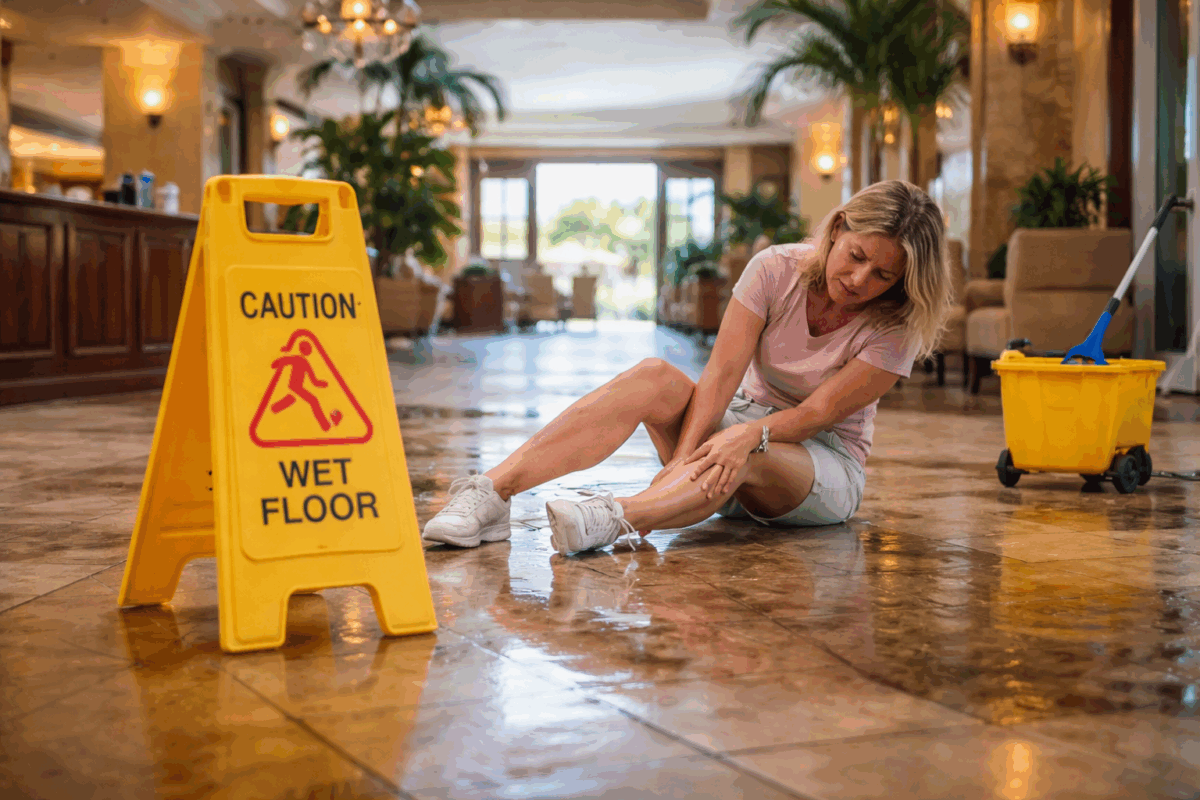
A sudden fall in a hotel or resort can wreck a trip and leave you scared, hurt, and unsure what to do next. You might worry about medical bills, missed work, or how to prove what happened. You may even blame yourself. You do not need to face this alone. There are clear steps you can take right away to protect your health and your rights. First, you must focus on your safety and get medical care. Next, you should report the fall to staff and gather proof before it disappears. Then you must understand how fault works and when the hotel or resort is responsible. This guide walks you through each step in plain terms. It also explains when to reach out to a Philadelphia slip and fall attorney so you do not miss key deadlines or lose important claims.
Step 1: Protect your body first
Stay still for a moment. Notice your pain. Try to move your fingers and toes. If you feel sharp pain in your head, neck, back, or hips, do not try to stand. Call for help.
If you can move without more pain, do three things.
- Stand up slowly and hold on to a stable object.
- Ask hotel staff to call medical help or an ambulance if you feel dizzy, confused, or weak.
- Accept medical care even if you feel “okay” at first.
Many head and joint injuries show up hours later. A quick check can catch hidden harm. You can read more about fall injuries on the Centers for Disease Control and Prevention fall safety page.
Step 2: Report the fall right away
Tell hotel staff what happened as soon as you can. Ask to speak with a manager. Stay calm and clear.
State three key points.
- Where you fell. For example, “by the lobby ice machine” or “near the pool stairs.”
- What caused the fall. For example, “wet floor with no sign” or “torn carpet at the doorway.”
- Who saw it. Give names and contact details if you have them.
Ask the manager to create a written incident report. Then ask for a copy or at least the report number. Take a clear photo of any written report they show you.
Step 3: Collect proof before it is gone
Evidence fades fast. Water dries. Staff clean floors. Signs appear that were not there before. You protect yourself when you act fast.
Use your phone and follow this simple list.
- Take wide photos of the whole scene.
- Take close photos of the exact spot where you fell.
- Photograph hazards such as wet spots, cords, loose mats, poor lighting, or broken tiles.
- Photograph your injuries and your clothing and shoes.
Next, ask witnesses for three details.
- Their name.
- Their phone number or email.
- A short written or recorded statement, if they agree.
If you feel strong enough, write your own notes within a few hours. Record the time, date, weather, and what you were doing right before you fell.
Step 4: Get medical care and keep records
See a doctor the same day if possible. Tell the doctor exactly how you fell and where you hurt. Ask for copies of the visit notes and any test results.
Then keep a small folder or envelope for three types of records.
- Medical bills and visit summaries.
- Receipts for medicine, braces, or crutches.
- Written notes from your job about missed work and lost pay.
These records show the link between your fall and your losses. They support your claim if you seek payment later.
Step 5: Understand hotel responsibility
Hotels and resorts must keep their property reasonably safe. You are not asking for perfection. You are asking for basic care.
Staff should do three things.
- Check for hazards on a regular schedule.
- Fix known dangers within a fair time.
- Warn guests with clear signs until repairs are done.
If the hotel knew or should have known about a hazard and did nothing, you may have a strong claim. If you were careless, you may still have a claim. Many states share fault between guest and property owner. Rules vary. You can read general guidance on premises safety from the National Institute of Arthritis and Musculoskeletal and Skin Diseases fall and fracture resource.
Step 6: Guard your words and your rights
After a fall, you may feel pressure to talk. A staff member may ask you to “sign something for the file.” An insurance adjuster may call and request a recorded statement.
Use three simple rules.
- Do not admit blame or say “It was my fault.” Just describe facts.
- Do not sign forms that you do not understand.
- Do not accept money or free stays in exchange for a release without legal advice.
Your words can reduce your claim even when you speak from shock or shame. Take your time. Think before you answer. You have the right to say you prefer to speak after you talk with legal counsel.
Helpful comparison: what to do vs what to avoid
| Right after a hotel slip and fall | Helpful actions | Harmful actions
|
|---|---|---|
| Health and safety | Check for pain. Call for help. Accept medical care. | Jump up fast. Refuse care to “tough it out.” |
| Reporting | Notify staff. Ask for an incident report. Get a copy. | Leave without telling anyone. Assume staff saw it. |
| Evidence | Take photos. Gather witness details. Write notes. | Rely on memory. Trust that cameras will show everything. |
| Communication | State facts only. Decline to guess about blame. | Apologize. Accept blame. Joke that you are “just clumsy.” |
| Legal rights | Keep records. Ask questions. Seek legal advice. | Sign releases. Accept quick payments without review. |
When to contact legal help
Reach out for legal guidance if any of these apply.
- You needed emergency care or a hospital stay.
- You missed work or school because of the fall.
- The hotel blames you or refuses to share incident reports.
- An insurer calls you and pushes for a quick settlement.
A lawyer can review your facts, explain deadlines, and speak for you. This support can ease stress so you can focus on healing.
Protect yourself and your family
A slip and fall at a hotel or resort can shake your sense of safety. You cannot erase the event. You can choose your next steps.
Remember three core actions. Seek prompt medical care. Report and record what happened. Guard your rights before you sign or agree to anything.
These steps help you protect your health, your income, and your peace of mind during a hard moment away from home.
