


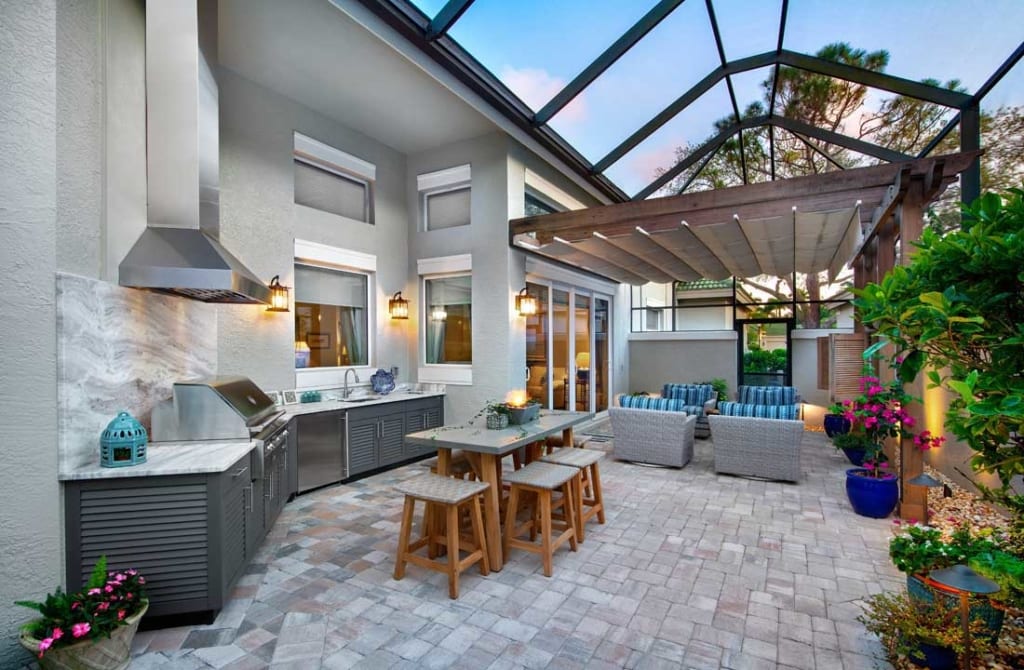
An outdoor kitchen can be a grill on a patio. Or it can be a fully functional space where cooking, eating, and hanging out all happen without running back inside every ten minutes. The difference comes down to planning. The best outdoor kitchens and living spaces are designed like a real room: they have flow, comfort, storage, lighting, and protection from heat and weather.
If you’re considering an upgrade, it helps to think beyond the appliances. Outdoor spaces that get used regularly feel easy. Everything is within reach. Guests naturally gather where you want them to. Cleanup is simple. And the space still works when the sun is intense or the temperature drops at night.
This guide covers the key design choices that matter most, popular layout options, must-have features, what drives cost, and mistakes to avoid.
Start With How You Actually Use the Space
Before choosing countertops or grills, clarify what you want the space to do.
Some people want a simple cooking zone that supports weeknight meals. Others want an entertainment hub with seating, a bar, and room for big gatherings. Some want a cozy “living room outside” with a fire feature and a TV, where cooking is secondary.
Your priorities affect everything: layout, size, appliance selection, shade needs, and where you place seating. A great outdoor space supports your real habits, not your Pinterest board.
Core Zones in Outdoor Kitchens and Living Spaces
The best designs usually include three zones, even in smaller footprints.
Cooking zone
This is the grill and prep area. It should have safe clearance from walls, railings, and seating, plus good ventilation. It should also include enough counter space for prep and plating.
If you cook often, storage near the grill is a big deal. Having tools, seasonings, and trays nearby makes the space feel like a real kitchen, not a campsite.
Serving and dining zone
Dining can be a table, a bar-height counter, or a mix. The key is that it’s positioned so people can eat comfortably without feeling like they’re in the “hot zone” near the grill.
If you host, a bar counter can be one of the most social features because guests can chat with the cook without getting in the way.
Lounge zone
This is where people relax after eating, or where gatherings naturally start. Lounge seating works best when it has a focal point, like a fire pit, a view, or a TV wall. It also needs lighting and enough space to move around without bumping into furniture.
Even if you don’t build a large lounge area, adding a small seating cluster can dramatically increase how often the space gets used.
Popular Layout Options
You don’t need a massive yard to create a functional outdoor kitchen and living space. The layout just needs to match the space and how people move through it.
A straight-line layout works well in narrow patios or along a wall. It can include a grill, prep space, and storage in one run. It’s efficient and often more budget-friendly.
An L-shape layout gives you more counter space and better separation between cooking and serving. It also creates a natural boundary that can define the space.
A U-shape layout provides the most workspace and can feel like a real kitchen, but it needs more room to avoid crowding. It works best when you want a strong “chef station” and frequent hosting.
Island layouts can be great when you want seating around the kitchen. They encourage conversation and can serve as both prep and serving space.
Must-Have Features That Make the Space Easier
A lot of outdoor kitchens look great but feel inconvenient. These features usually make the biggest difference in daily use.
Counter space and landing zones
You need space next to the grill for trays, plates, and utensils. A beautiful grill without landing space becomes frustrating fast.
Storage that makes sense
Outdoor-rated drawers and cabinets keep tools and supplies in the space so you’re not carrying everything out each time. At minimum, you want storage for grilling tools, serving trays, and basic cleaning supplies.
Sink and water access
A sink is one of the biggest upgrades for convenience. It supports food prep, hand washing, and quick cleanup. If a sink isn’t possible, even a water line for a small prep sink can change the experience.
Fridge or beverage cooler
If your goal is entertaining, a beverage fridge keeps guests out of your indoor kitchen. It also helps the cook stay focused without constant trips.
Trash and cleanup planning
A hidden trash pull-out is a simple detail that keeps the space tidy. Cleanup is part of design. If it’s awkward, it won’t happen as smoothly.
Comfort Features That Increase Use
People often underbuild comfort, then wonder why they don’t use the space as much as expected.
Shade and sun control
Direct sun can make a beautiful space unusable. Pergolas, roof structures, umbrellas, or shade sails can change everything. Shade is often the difference between “we use it sometimes” and “we use it constantly.”
Heating and fire features
Outdoor living should not stop when evenings get cool. Patio heaters, built-in heaters in a covered structure, and fire pits can extend your season significantly.
Fans and airflow
Fans help in hot weather and also help keep bugs down in some areas. They’re especially useful in covered spaces.
Lighting
Outdoor lighting should be layered. Task lighting for cooking, ambient lighting for seating, and pathway lighting for safety. Without good lighting, outdoor kitchens and living spaces feel unfinished at night.
Sound and entertainment
If you want the space to feel like a living room, consider outdoor speakers or a simple setup for music. TVs can work well in covered areas, but placement matters to avoid glare and weather damage.
Materials That Hold Up Outdoors
Outdoor environments are hard on materials. Heat, moisture, UV exposure, grease, and temperature swings all add wear.
Countertops need to be durable and low maintenance. Many people choose stone options that perform well outside, but the right choice depends on climate and exposure. Cabinetry should be outdoor-rated, not standard indoor cabinets. Flooring and pavers should handle moisture and provide slip resistance.
Appliances also need to be rated for outdoor use. Indoor appliances placed outside often fail early and can become a safety issue.
A good design balances beauty with realistic maintenance.
What Drives Cost
Cost depends on size, appliance package, utilities, and how built-in the project is.
A basic built-in grill with counter space and storage is a different project than a full kitchen with a sink, fridge, ice maker, ventilation hood, and custom lighting. Utility runs, especially gas, electrical, and plumbing, can significantly increase cost.
Covered structures also add cost, but they often increase usability enough to be worth it if your climate is hot, rainy, or very sunny.
Finishes and custom details can also add a lot. Stone veneer, premium countertops, and high-end appliances are all major cost drivers.
Mistakes to Avoid
One common mistake is building the kitchen without enough prep space or storage. Another is placing seating too close to the grill, which makes the area uncomfortable and unsafe.
Poor drainage is another issue. Outdoor spaces need grading that moves water away from structures and away from the kitchen zone.
Underestimating lighting is also common. People plan for daytime, then the space feels dark and unused at night.
Finally, skipping permits or proper utility planning can lead to expensive rework. Outdoor kitchens often require electrical work, gas lines, and sometimes plumbing, and those should be done correctly and safely.
Practical Takeaways
Great outdoor kitchens and living spaces are designed around real use. They typically include cooking, dining, and lounge zones, plus key convenience features like counter space, storage, and cleanup planning. Comfort features like shade, lighting, and heating often determine how often you actually use the space.
If you want a space that feels easy and inviting, prioritize flow, protection from sun and weather, and the basics that reduce trips back inside.
Conclusion
A well-designed outdoor space can become the most used “room” in your home, especially when it supports how you cook and how you host. The best outdoor kitchens and living spaces feel natural, functional, and comfortable, not like a showpiece you only use on special occasions.
If you plan the layout, utilities, shade, and lighting upfront, you’ll end up with an outdoor setup that’s not just красив, but genuinely livable.
