


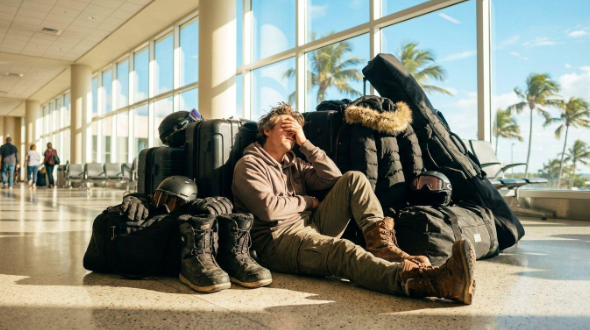
Travelers often scrutinize flight prices and hotel rates yet ignore a silent budget killer: seasonal gear logistics. swapping ski boots for flip-flops or dragging heavy winter coats through tropical heat creates more than just physical discomfort. It generates logistical headaches and financial waste. Mastering how seasonal transitions influence spending allows adventurers to pack efficiently and stop paying double for equipment they already own but cannot reach.
This dilemma affects everyone crossing climate zones. Business professionals, international students, and digital nomads seeking eternal summer all face the same choice: carry, ship, store, or replace. Each option involves calculated trade-offs. To simplify these logistics, services like Qeepl offer practical alternatives. You can go to site to find luggage storage in major hubs, sparing you the burden of hauling unnecessary winter wardrobes across your entire itinerary.
The Hidden Cost of Carrying Off-Season Gear
Airlines ruthlessly punish excess weight. Checked bag fees average $35-75 domestically and skyrocket to $200 for international flights. Travelers moving between climates often pack bulky coats and heavy boots that remain untouched for weeks. effectively paying premium rates to transport dead weight. The math becomes even grimmer on multi-leg journeys where every carrier demands separate payment.
Overpacking also forces difficult compromises. That extra suitcase leaves no room for souvenirs or forces expensive shipments home. Furthermore, baggage handlers rarely treat luggage with care. vivid ski jackets and technical hiking boots risk damage in transit. Lost luggage claims drag on for weeks, and airline reimbursement rarely covers the full replacement value of specialized equipment.
Shipping Gear Ahead Sounds Smart But Rarely Is
Mailing a box of clothes appears logical until you see the shipping rates. Couriers like FedEx charge $50-150 to move a standard package domestically, while international fees start around $200. Delivery often takes 7-14 days within the country and up to six weeks internationally, provided customs officials do not hold your items hostage.
Parcels also vanish. Unlike airlines that accept some liability, courier services cap standard reimbursement at $100 without expensive extra insurance. A lost $300 jacket might result in a meager check after weeks of paperwork. Coordinating the handoff adds another layer of complexity, as many hotels and Airbnbs refuse to accept packages for guests who have not yet arrived.
Storage Solutions Save Money for Frequent Travelers
Monthly Rental Units Versus Per-Day Options
Traditional self-storage units demand $50-200 monthly depending on location. For travelers absent for long stretches, this proves cheaper than constant replacement. A secure locker housing camping gear and winter staples might cost $600 annually, a bargain compared to spending $2,000 to repurchase those items every winter.
Conversely, short-term luggage networks charge $5-15 daily. These suit travelers transiting through cities for days rather than months. Services place bags in trusted local shops or hotels near transit points. A two-week European detour might cost $150 in storage fees, significantly less than the $300 required to drag extra baggage onto multiple flights.
Comparing Costs Across Storage Types
Calculating true value requires aligning storage methods with travel habits. Consider these scenarios:
- A nomad storing winter gear at home: $900 yearly for a unit versus $400 to replace basics.
- A business traveler using daily storage: $210 for three trips versus $180 in baggage fees.
- A student abroad: $400 for round-trip shipping versus $300 for a semester rental.
The logic shifts based on gear value. Storing a tailored suit or technical climbing harness makes financial sense; hoarding cheap gym clothes does not.
Replacement Costs Add Up Faster Than Expected
Buying new gear at every destination feels convenient until the receipts tally up. Replacing a basic winter wardrobe easily costs $300-500 when factoring in boots, gloves, and thermal layers. High-quality outdoor equipment doubles that expense. Travelers visiting cold regions twice a year needlessly spend $1,000 replacing items sitting in a closet elsewhere.
Summer gear accumulates cost similarly. Swimwear, sandals, and towels total $200 quickly when bought new. Furthermore, replacement shopping consumes precious vacation time. scouring unfamiliar cities for specific sizes or styles frustrates travelers and often leads to settling for inferior quality or poor fit.
Climate Unpredictability Complicates Planning
Weather forecasts beyond ten days offer little certainty, forcing travelers to guess. A sudden warm spell in February renders ski gear useless, while unexpected cold fronts leave summer packers shivering. This uncertainty drives conservative packers to bring everything, leading right back to excessive baggage fees.
Transitional seasons create chaos. March and October regularly swing between extremes, demanding diverse clothing simultaneously. Unable to predict if a destination will be 70°F or 40°F, travelers pack for both. This caution effectively doubles luggage volume and weight, increasing both physical strain and financial cost.
Smart Strategies to Minimize Seasonal Gear Expenses
Seasoned travelers use specific tactics to protect their wallets:
- Layering systems utilize versatile pieces to cover multiple temperature ranges with fewer items.
- Rental services at resorts or beach towns remove the need for ownership entirely.
- Compression bags reduce the volume of bulky jackets by half, saving luggage space.
- Cooperative storage with friends in hub cities offers free access to off-season gear.
These methods require foresight but yield savings. A skier visiting Colorado might rent equipment for $200 rather than paying $900 for annual storage. Conversely, a frequent skier saves money by owning gear and storing it locally.
When to Invest in Multi-Climate Gear
Premium convertible clothing commands a high price but functions year-round. Jackets with removable linings adapt from winter to spring, while zip-off pants double as shorts. Materials like Merino wool regulate body temperature in both heat and cold. buying these items costs more upfront but eliminates the need for separate wardrobes.
Your travel frequency dictates the investment. Someone flying internationally twice a year might spend $800 on versatile gear that lasts five years. This beats spending $400 annually on seasonal replacements. For digital nomads on the road constantly, high-performance gear justifies the cost through daily use.
Regional Price Variations Affect Replacement Decisions
Sometimes, replacing gear at your destination costs less than moving it. Winter coats in Southeast Asia might sell for $40 compared to $200 in North America, provided you accept standard sizing. However, buying technical gear in resort towns usually carries a heavy markup.
Smart travelers research pricing before departing. A backpacker heading to Patagonia might purchase fleece layers in Buenos Aires to avoid hauling them. Meanwhile, a visitor to rural Japan packs essentials, knowing local replacements will be scarce and expensive.
Balancing Convenience Against Costs
No single strategy fits every itinerary. Short vacations often justify paying baggage fees for simplicity, while extended trips demand complex logistics. Expensive specialty gear requires protection, whereas cheap basics can be discarded and replaced without regret.
The secret lies in calculating actual costs rather than acting on habit. Travelers who track expenses across shipping, storage, and replacement often uncover savings by switching tactics. A $200 storage fee looks attractive against $500 in new purchases. Conscious management of seasonal equipment prevents hidden costs from undermining your travel experiences.
