


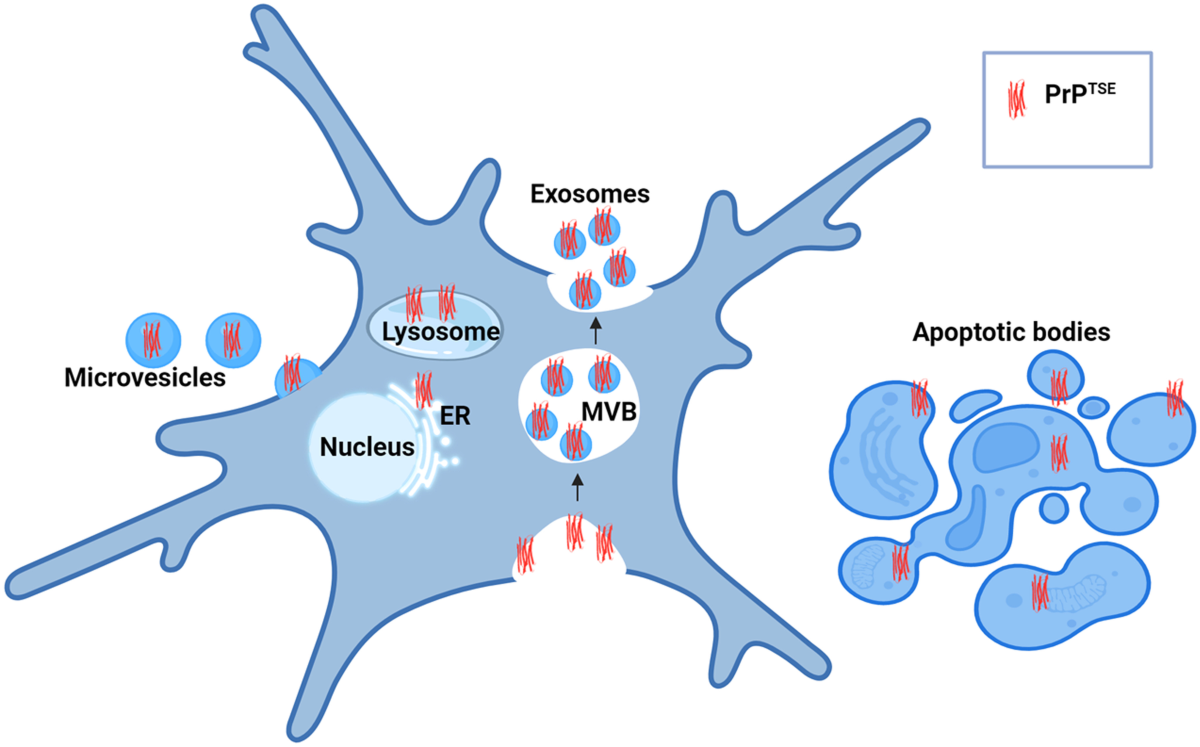
Transmissible spongiform encephalopathies (TSEs), also known as prion diseases, are a group of fatal neurodegenerative disorders caused by the misfolding of prion proteins. These diseases affect both humans and animals, with examples including Creutzfeldt-Jakob disease (CJD) in humans, scrapie in sheep, and chronic wasting disease (CWD) in deer. A significant challenge in managing prion diseases is their environmental persistence, which complicates efforts in disease control and decontamination. This article explores the factors contributing to prion persistence in the environment and the challenges faced in controlling and decontaminating prion-contaminated environments.
Prion Proteins and Their Pathogenicity
Prion proteins (PrP) exist in two forms: the normal, cellular form (PrP^C) and the misfolded, disease-associated form (PrP^Sc). The conversion of PrP^C into PrP^Sc leads to the accumulation of insoluble and protease-resistant prion aggregates, which are the hallmark of TSEs. PrP^Sc is highly stable and can remain infectious for extended periods in the environment, posing a significant risk for transmission.
Factors Contributing to Environmental Persistence
Several factors contribute to the environmental persistence of prions:
- Stability and Resistance: PrP^Sc is remarkably stable and resistant to conventional decontamination methods. It can withstand extreme temperatures, radiation, and chemical treatments, making it difficult to eliminate from the environment.
- Soil Binding: Prions can bind to soil particles, particularly clay minerals, which enhances their stability and prolongs their infectivity. This binding protects prions from degradation and increases the likelihood of transmission through contaminated soil.
- Water Contamination: Prions can contaminate water sources through runoff from infected animal carcasses or contaminated soil. Waterborne prions pose a risk to both wildlife and livestock, as well as to human populations consuming contaminated water.
- Animal Carcasses: The remains of infected animals can release prions into the environment. Scavengers and predators can spread prions further, contributing to environmental contamination.
Challenges in Disease Control
The persistence of prions in the environment presents significant challenges for disease control:
- Transmission Risk: Environmental persistence of prions increases the risk of horizontal transmission among animals. For instance, CWD prions can remain infectious in the environment for years, leading to sustained outbreaks in deer and elk populations.
- Monitoring and Surveillance: Detecting and monitoring prions in the environment is challenging due to their low concentrations and the lack of highly sensitive detection methods. This hampers efforts to assess the extent of contamination and implement effective control measures.
- Biosecurity Measures: Implementing biosecurity measures to prevent the spread of prions is difficult, particularly in regions with dense wildlife populations. Fencing, animal movement restrictions, and carcass disposal protocols are critical but not always feasible.
- Agricultural Impact: Prion-contaminated environments pose a risk to livestock, potentially leading to economic losses in agriculture. Contaminated pastures can infect grazing animals, perpetuating the cycle of disease.
Decontamination Strategies
Efforts to decontaminate prion-contaminated environments face several obstacles:
- Chemical Treatments: While certain chemicals, such as sodium hydroxide and sodium hypochlorite, can inactivate prions, their effectiveness is limited in environmental settings. These chemicals may not penetrate soil effectively and can have detrimental effects on the ecosystem.
- Thermal Inactivation: High temperatures can inactivate prions, but achieving the necessary temperatures in environmental contexts is impractical. Incineration of contaminated materials is an option but may not be feasible for large-scale decontamination.
- Biological Methods: Research into biological methods, such as prion-degrading microorganisms, is ongoing. These methods hold promise but require further development and testing to ensure their efficacy and safety.
- Physical Removal: Removing prion-contaminated soil or carcasses can reduce environmental prion loads. However, this approach is labor-intensive, costly, and may not be practical for large or remote areas.
Future Directions
Addressing the challenges of prion persistence in the environment requires continued research and innovation. Developing more sensitive detection methods, understanding prion-soil interactions, and exploring new decontamination technologies are critical areas of focus. Collaborative efforts between scientists, public health officials, and agricultural stakeholders will be essential for advancing prion disease control and decontamination strategies.
Conclusion
The environmental persistence of prions presents significant challenges for disease control and decontamination. The stability and resistance of prions, combined with their ability to bind to soil and contaminate water sources, complicate efforts to mitigate their spread. Addressing these challenges requires a multifaceted approach, including improved detection methods, effective decontamination strategies, and comprehensive disease monitoring programs. Continued research and collaboration are essential for overcoming the obstacles posed by prion persistence and safeguarding both animal and human health.
