


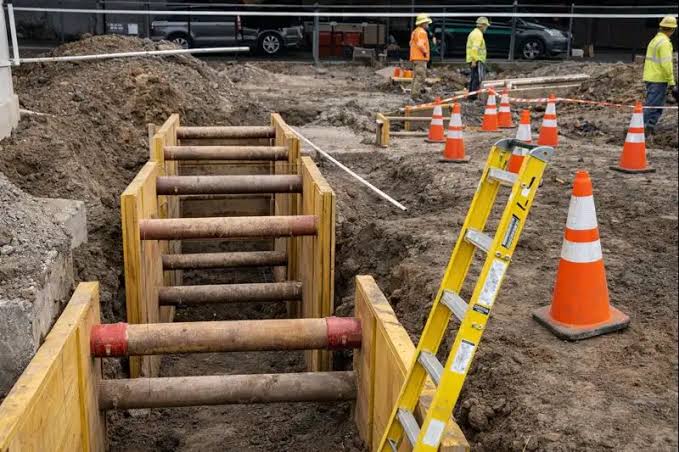
Deep excavation and structural renovation can change the way soil, foundations, walls, slabs, and columns carry loads. Before permanent construction is complete, temporary support systems help keep the work area stable and protect workers, adjacent property, and existing building elements. A contractor experienced in https://www.sjhauckconstruction.com/services/shoring-and-underpinning/shoring-contractor/structural-shoring can coordinate the temporary measures needed while a project moves from demolition and excavation to permanent construction.
Temporary support is not a last-minute response to a problem. It is a planned part of the construction process. The system must account for site conditions, the order of work, equipment loads, water, nearby utilities, and the point at which the permanent structure can safely take over.
Why Temporary Support Matters
Temporary support keeps loads controlled while permanent walls, foundations, or framing are still being installed. Supporting an excavation is different from supporting a building, although the two needs often overlap. Excavation support holds back soil and limits ground movement. Structural shoring transfers or carries building loads during the repair, removal, or replacement of a wall, column, beam, or foundation section.
A Simple Example
Consider a basement addition beside an older masonry building. Removing soil near the existing foundation can reduce the soil support around it. The project may need excavation retention, building support, or both. The right approach depends on the actual structure, soil, groundwater, and planned construction sequence.
How Excavation Changes Site Conditions
Excavation is more than a digging operation. As soil is removed, pressure conditions change around the open cut and nearby foundations. Soil can move toward an excavation, particularly where ground is loose, wet, disturbed, or subject to additional loading. Water also deserves close attention because it can affect soil behavior, create hydrostatic pressure, and complicate access.
Project teams should identify surcharge loads near the excavation edge, including stored materials, vehicles, cranes, and equipment. They should also verify the location of buried utilities and older foundation elements before digging progresses. The conditions that affect trenching and excavation safety include soil, water, nearby structures, utilities, traffic, and changing weather, all of which can affect a support plan.
Common Temporary Support Methods
No single system fits every site. Designers and contractors select methods based on excavation depth, available space, soil conditions, groundwater, access, adjacent structures, and the construction sequence. Common approaches include:
- Steel bracing: Internal braces can resist pressure between opposite sides of an excavation support system.
- Soldier piles and lagging: Vertical steel members with horizontal lagging can retain soil along the perimeter of an excavation.
- Sheet piles: Interlocking steel sections can form a continuous retaining barrier in suitable conditions.
- Hydraulic shoring: Adjustable supports can provide controlled bracing where the design and site conditions allow.
- Needle beams and support towers: These systems can temporarily carry building loads while structural elements are altered.
- Cribbing: Timber or steel cribbing can distribute loads and provide stable temporary bearing where properly designed and installed.
Temporary components often remain in place until permanent foundations, walls, slabs, or framing have reached the required condition to carry their intended loads.
Planning Before Work Begins
Early planning gives the project team a clearer picture of existing conditions and reduces avoidable surprises. Before structural removal or excavation begins, the team should:
- Review available structural drawings, foundation information, and repair records.
- Document nearby buildings, sidewalks, pavements, walls, and visible cracks.
- Review geotechnical information, groundwater conditions, and drainage patterns.
- Confirm property lines, access routes, overhead obstructions, and working clearances.
- Locate utilities and establish procedures for unexpected utility conflicts.
- Coordinate temporary works with the permanent structural design.
Condition surveys and photographs provide a useful baseline before work begins. They help the project team recognize changes during construction and communicate clearly with owners, neighbors, and other stakeholders.
Why Construction Sequencing Matters
A temporary support system must perform safely at every stage, not simply when excavation reaches its final depth. For example, a deep excavation may require installation of an initial support level before workers continue digging. Additional braces, anchors, or support elements may be installed at planned elevations as excavation proceeds.
A typical sequence includes installing initial support elements, excavating in controlled stages, inspecting connections and bearing points, installing permanent work, and removing temporary supports only when authorized by the responsible design professional. Changes in sequence should not be treated as minor field adjustments, as they can alter the loads acting on temporary systems.
Monitoring Movement and Vibration
Monitoring provides information that helps the project team evaluate actual site behavior during construction. Depending on the project, monitoring may track excavation-wall movement, nearby settlement, crack changes, groundwater conditions, or vibration near sensitive structures and equipment.
Readings are most useful when baseline information is collected before major work, measurements are taken throughout key construction stages, and results are reviewed promptly. The team should establish clear alert levels, identify who receives the information, and define actions for readings that exceed anticipated ranges. Monitoring supports sound engineering judgment, but it does not replace proper design, inspections, or safe work practices.
Protecting Nearby Buildings and Utilities
Tight sites create added challenges because neighboring properties may share walls, sidewalks, utility corridors, or closely spaced foundations. Heavy equipment and material stockpiles should be kept away from the edges of unsupported excavations. Safe barriers, lighting, access routes, and emergency access should remain part of the daily site plan.
Historic and older buildings may require special attention because masonry, aging drainage systems, and shallow foundations can be sensitive to movement and changes in water conditions. The protection of historic structures benefits from careful documentation, water control, and coordination before adjacent construction begins.
Questions to Ask the Project Team
- Which site conditions control the temporary support design?
- How close will excavation come to nearby foundations and utilities?
- What is the plan if groundwater or weather conditions change?
- Which construction steps require added bracing or inspection?
- How will movement, vibration, and water conditions be monitored?
- What readings or observations require work to pause for review?
- Who is authorized to approve changes to the temporary works plan?
- When can temporary supports be removed?
Conclusion
Temporary support is a core part of safe excavation and structural renovation, not an afterthought. Careful design, staged construction, field inspections, water management, and monitoring all help the project team manage changing site conditions. When temporary works are coordinated with the permanent design from the start, the project is better positioned to protect workers, neighboring properties, utilities, and the finished structure.
