


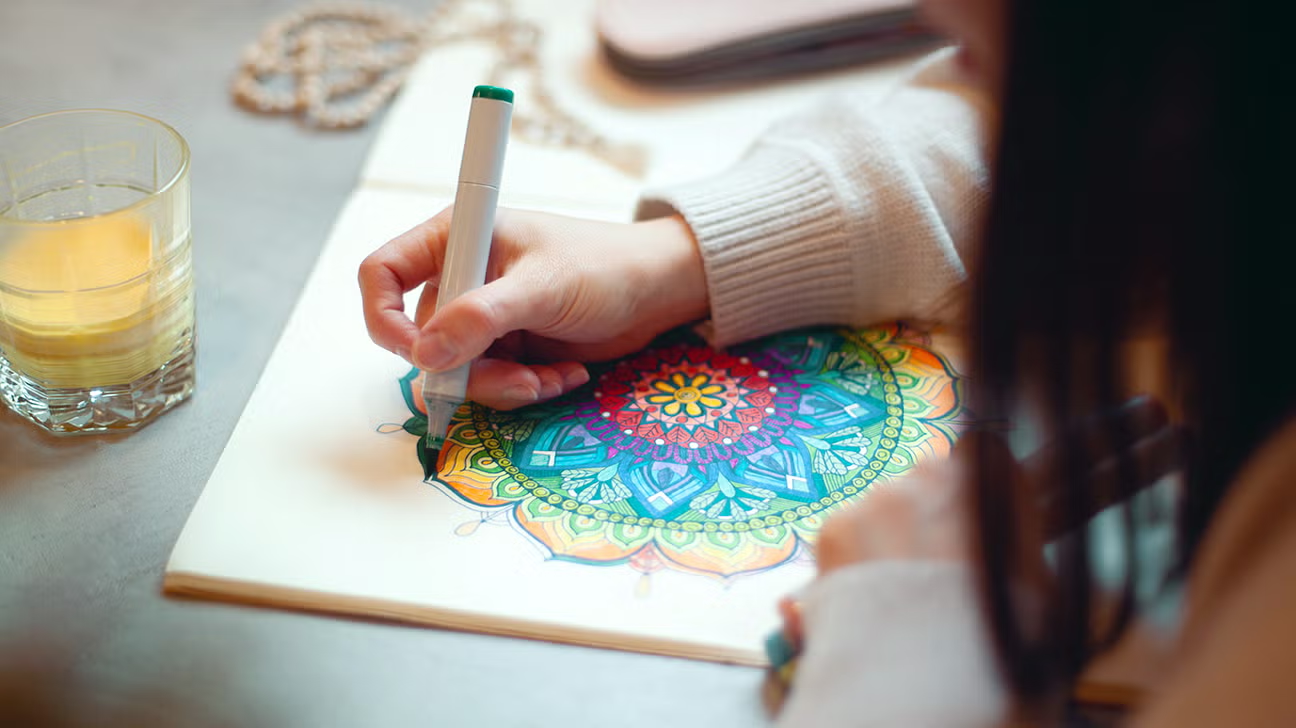
A calming routine does not have to involve a major schedule change. A few minutes of coloring can give your hands something simple to do while creating a break from notifications, errands, and unfinished tasks. The goal is not to produce impressive artwork. It is to make room for an activity that feels pleasant and manageable.
Unlike drawing from a blank page, a pre-drawn design removes the pressure of deciding what to create. You can choose a page, pick a few colors, and begin. That low barrier to entry makes coloring especially practical when you want a creative reset but do not have much time or energy.
Why Coloring Can Work as a Daily Creative Break
Coloring gives attention a clear, limited task: choose a color, fill a shape, then move to the next one. For some people, that structure can feel easier than sitting still with no activity at all. It can also create a screen-free moment during a day that involves work messages, social feeds, or streaming.
The best routine is not necessarily long, detailed, or rigid. A page can remain unfinished for days, and a quick session can still be worthwhile. Treat the activity as a pause rather than another item to complete perfectly.
What Current Research Says
Research on coloring and stress-related experiences is still developing, and results should be interpreted carefully. A 2026 study of 60 university students compared digital and paper-based mandala coloring after an anxiety-induction task. The researchers reported lower self-reported state anxiety following the activity and noted differences in flow and physiological measures between formats. The study focused on a specific student sample and a controlled 30-minute activity, so its findings cannot be generalized to the experiences of every person at home. Still, the digital mandala coloring study offers useful context for people deciding whether paper or an app feels more inviting.
A 2026 meta-analysis also examined mandala coloring among adult hospitalized patients. Hospital settings, health needs, and guided interventions differ substantially from a casual session at a kitchen table, so those results should not be treated as a promise of a particular outcome at home. The analysis of hospitalized adults is a reminder that coloring research often involves particular populations and conditions.
In everyday life, it is reasonable to view coloring as a leisure activity that may help you take a breather, settle into a task, or enjoy a small moment of focus. It does not cure anxiety, depression, insomnia, or other health conditions. Anyone struggling with persistent distress should seek support from a qualified health professional.
Choose a Time That Already Fits Your Day
- Morning: Color for 5 to 10 minutes before opening messages or starting household tasks.
- Midday: Use part of a lunch break or the space between demanding tasks for a screen-free reset.
- Evening: Pair coloring with quiet music, a familiar podcast, or a cup of tea.
- Weekend: Set aside a longer session for detailed pages, new tools, or relaxed family time.
Choose one option that seems realistic rather than idealized. If evenings are unpredictable, a small midday session may be easier. If mornings are rushed, leave the materials for a weekend ritual instead.
Set Up a Low-Stress Coloring Space
Your space can be a desk, a kitchen table, a favorite chair with a lap desk, or any stable surface with enough light. Keep the page and tools in one container so beginning does not require searching through drawers. If you use markers, place scrap paper underneath to protect the surface and prevent bleed-through.
Comfort matters more than creating a picture-perfect creative corner. Good lighting can make small details easier to see, and a simple cleanup routine makes you more likely to return tomorrow.
Pick Tools Without Overthinking Them
- Colored pencils: Useful for small areas, shading, and controlled color placement.
- Crayons: Simple, affordable, and easy to use for broad shapes.
- Gel pens: Good for crisp lines and small decorative details, though they may need drying time.
- Markers: Fast and bold, but more likely to bleed through thin paper.
Start with what you already own or choose a modest set. Test a tool on spare paper first, especially if the page is printed double-sided. You can add more colors or materials later if the routine becomes something you genuinely enjoy.
A Simple Five-Step Coloring Routine
- Set a short time block. Begin with five or ten minutes instead of committing to a full page.
- Choose one page quickly. Keep a few options nearby, then select one without prolonged comparison.
- Limit your palette. Pick three to five colors to reduce decision fatigue.
- Color at a comfortable pace. Work section by section, and stop before the activity becomes tiring.
- Check in afterward. Notice whether you feel more settled, energized, bored, or distracted, then adjust next time.
Make the Experience More Mindful
You do not need a formal meditation practice to color mindfully. Bring attention to the pencil moving across the paper, the pressure of your hand, and the contrast between colors. When your thoughts drift to a meeting, chore, or worry, simply return attention to the next shape. There is no need to force calmness or judge whether the session “worked.”
Keep the Habit Going
Attach coloring to something you already do, such as drinking morning coffee or winding down after dinner. Track time spent rather than pages completed, since a five-minute session counts. When the habit starts to feel stale, change the page style, try a different tool, or invite someone to join you.
Make Room for a Small Creative Pause
A useful coloring routine is simple, flexible, and personal. Avoid buying too many supplies, setting overly ambitious goals, or comparing your page with polished images online. A few quiet minutes can be enough to create a little distance between one demand and the next, and that is a worthwhile reason to begin.
