


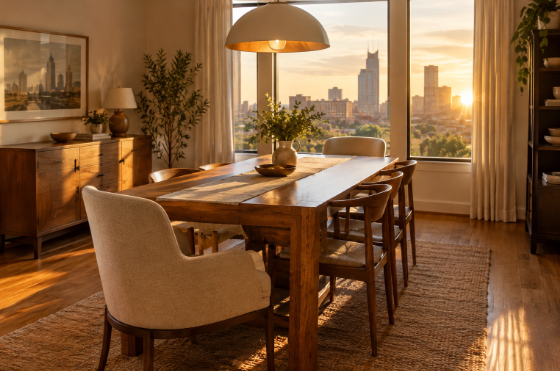
How to Create a Dining Room That Fits the Way You Live in Tulsa, Oklahoma
Key Takeaways
- A well-designed dining room supports everyday meals, entertaining, and other household activities.
- Table shape, size, and placement affect seating capacity and ease of movement.
- Comfortable chairs and durable, easy-care materials make the space more practical.
- Flexible lighting and well-proportioned storage support different uses without adding clutter.
- Personal style and coordination with nearby rooms help the dining area feel welcoming and connected.
A well-planned dining room can make everyday meals easier, give guests a comfortable place to gather, and add a sense of purpose to your Tulsa home. Whether you are furnishing a historic home near downtown or a newer space farther south, the best starting point is choosing pieces that serve your real routine. Coordinating the dining area with nearby living room furniture in Tulsa can also help an open layout feel connected without making every room look identical.
Instead of designing around a single trend, focus on comfort, circulation, storage, and materials that suit your household. A dining room should feel ready for quick weekday breakfasts, long holiday meals, homework sessions, game nights, and casual after-dinner conversations.
Table of Contents
- Start With How the Room Will Be Used
- Choose a Layout That Supports Easy Movement
- Find the Right Table Shape and Size
- Match Seating to Comfort and Daily Needs
- Select a Style That Feels Personal
- Use Materials That Balance Beauty and Durability
- Plan Lighting for Meals, Work, and Entertaining
- Add Storage Without Making the Room Feel Crowded
- Make a Small Dining Area Work Harder
- Avoid Common Dining Room Planning Mistakes
- Use a Simple Final Planning Checklist
Start With How the Room Will Be Used
Before measuring furniture, consider what happens in the room most often. A household that eats together nightly needs durable, comfortable seating. Someone who hosts extended family may need an expandable table and extra chairs. In another home, the dining area may double as a workspace, craft station, or place for children to finish school assignments.
For example, a family of four may use a round table for daily meals, then keep two lightweight side chairs nearby for birthdays and holidays. Planning for both the usual day and the occasional larger gathering prevents a room from feeling either undersized or overfilled.
Choose a Layout That Supports Easy Movement
Measure the room before purchasing a table, chairs, or storage cabinet. Note door swings, windows, heating vents, pass-throughs, and the routes people use to reach the kitchen or living area. Leave enough space behind chairs for people to sit down and stand up without blocking traffic.
A centered table works well in a dedicated dining room. In an open plan, use a rug or lighting fixture to visually define the eating area. Corners can suit compact square tables, while a built-in nook can make an awkward wall feel intentional.
Find the Right Table Shape and Size
Match the shape to the room
- Rectangular tables suit longer rooms and larger groups.
- Round tables soften tight spaces and make conversation easier across the table.
- Square tables can work nicely for small, balanced rooms and everyday meals.
- Oval tables offer the seating capacity of a long table with gentler edges for circulation.
Extension leaves are especially useful when guests come over only occasionally. Also consider the base. Pedestal tables can make it easier to fit an extra chair, while tables with legs at the corners may offer a more familiar, structured look. Check legroom before committing to any style.
Match Seating to Comfort and Daily Needs
Dining chairs should support the amount of time people actually spend at the table. Try seats in person when possible, paying attention to seat height, back support, cushion firmness, and whether arms fit beneath the tabletop. Upholstered chairs bring softness, while wood or metal seating can be simpler to wipe down after frequent meals.
Mixing seating can make the room more adaptable. Use armchairs at the table ends, side chairs along the sides, or a bench where flexible seating matters. For homes with children or pets, choose fabrics and finishes that suit regular cleaning rather than treating every spill like an emergency.
Select a Style That Feels Personal
Tulsa homes can support many dining room looks, from traditional wood furniture to simple modern forms. The city’s well-known Art Deco architecture can also inspire a room with curved silhouettes, warm metals, geometric details, or rich accent colors.
- Traditional: balanced shapes, classic wood tones, and timeless details.
- Rustic: natural textures, relaxed finishes, and warm character.
- Modern: clean lines, uncluttered forms, and restrained color palettes.
- Collected or vintage: older finds paired with newer pieces for depth.
- Eclectic: mixed finishes and seating styles tied together by repeated colors or materials.
Use Materials That Balance Beauty and Durability
Wood adds warmth and can develop character over time, but its finish should suit the household’s tolerance for maintenance. Glass can make a small room feel visually lighter, though it shows fingerprints. Stone offers substantial visual weight, while metal can introduce contrast and an easy-care surface. Composite materials can be practical options when durability and budget are priorities.
Think through how the table will be used. If the dining room regularly handles serving dishes, art projects, or family meals, a surface that tolerates everyday wear may be more valuable than one that needs constant protection.
Plan Lighting for Meals, Work, and Entertaining
Layer lighting so the room can change with the occasion. A pendant or chandelier provides a focal point over the table, while wall lights, lamps, and daylight can soften the room around it. A dimmer gives more control for evening dinners, while brighter lighting is useful for work, crafts, or board games.
Choose a fixture that feels proportional to the table rather than the entire room, and hang it where it illuminates the tabletop without interfering with sightlines. Modern LED lighting technology offers dimming and color control options, which can help a single dining room accommodate different activities.
Add Storage Without Making the Room Feel Crowded
A sideboard, buffet, cabinet, shelving unit, or storage bench can keep serving pieces, linens, dishes, and candles close at hand. Favor closed storage for items that create visual clutter, then reserve a few open shelves for meaningful pieces. Select storage that relates to the table in scale and finish, rather than competing for attention.
Make a Small Dining Area Work Harder
Small Tulsa apartments, breakfast corners, and open-concept homes benefit from flexible choices. Consider a drop-leaf table, a pedestal base, nesting stools, or a bench that tucks fully underneath. Wall-mounted shelves can provide useful storage without taking up floor space.
Keep the visual weight light with a round table, reflective accents, and a limited number of large pieces. One well-designed dining zone can comfortably support meals, remote work, hobbies, and occasional entertaining.
Avoid Common Dining Room Planning Mistakes
- Buying a table before measuring the room and surrounding walkways.
- Choosing chairs for appearance alone instead of testing comfort.
- Selecting a fixture that is too small, too low, or poorly centered.
- Adding furniture until movement through the room becomes difficult.
- Matching every piece so closely that the room loses personality.
- Ignoring cleaning needs, durability, and daily use.
Use a Simple Final Planning Checklist
- Measure the room, doorways, and clear walking paths.
- List the usual number of diners and the largest expected gathering.
- Choose a table shape that supports both seating and movement.
- Test seating for comfort, height, and ease of care.
- Select finishes that fit your household’s routine.
- Plan lighting before adding artwork and decorative accents.
- Reserve storage for dishes, linens, and serving items.
- Leave enough open space for the room to feel welcoming.
The most successful dining rooms are not built around rigid rules. They are built around the people who use them. When your Tulsa dining room supports easy movement, comfortable meals, useful storage, and a style that feels like home, it becomes a space worth gathering in every day.
