



Math riddles for Kids are fun and tricky puzzles that challenge kids to use their logic, problem-solving skills, and basic math knowledge to find the answer. Unlike regular math problems, riddles often have a twist or require creative thinking to solve.
They can involve:
✅ Numbers and operations (addition, subtraction, multiplication, division)
✅ Patterns and sequences
✅ Logical reasoning
✅ Wordplay with numbers
For example:
“I am an odd number. Take away one letter, and I become even. What am I?”
Answer: Seven (remove the “s” to get “even”)
Math riddles help sharpen young minds while making learning exciting and engaging!
Why Math Riddles Are Great for Kids

Math riddles are more than just fun—they offer valuable learning benefits for kids. Here’s why they are a great way to boost a child’s thinking skills:
Encourages Critical Thinking
Math riddles challenge kids to think outside the box and find creative solutions.
Improves Problem-Solving Skills
Solving riddles helps kids learn to analyze problems and develop logical strategies.
Makes Learning Fun
Instead of just solving equations, kids enjoy math as an exciting game.
Enhances Focus & Patience
Working through tricky riddles teaches kids perseverance and attention to detail.
Adds a Sense of Humor
Many math riddles have funny twists that make learning enjoyable and memorable.
Boosts Confidence
Successfully solving a riddle gives kids a sense of achievement and motivation to keep learning.
Easy Math Riddles for Young Learners
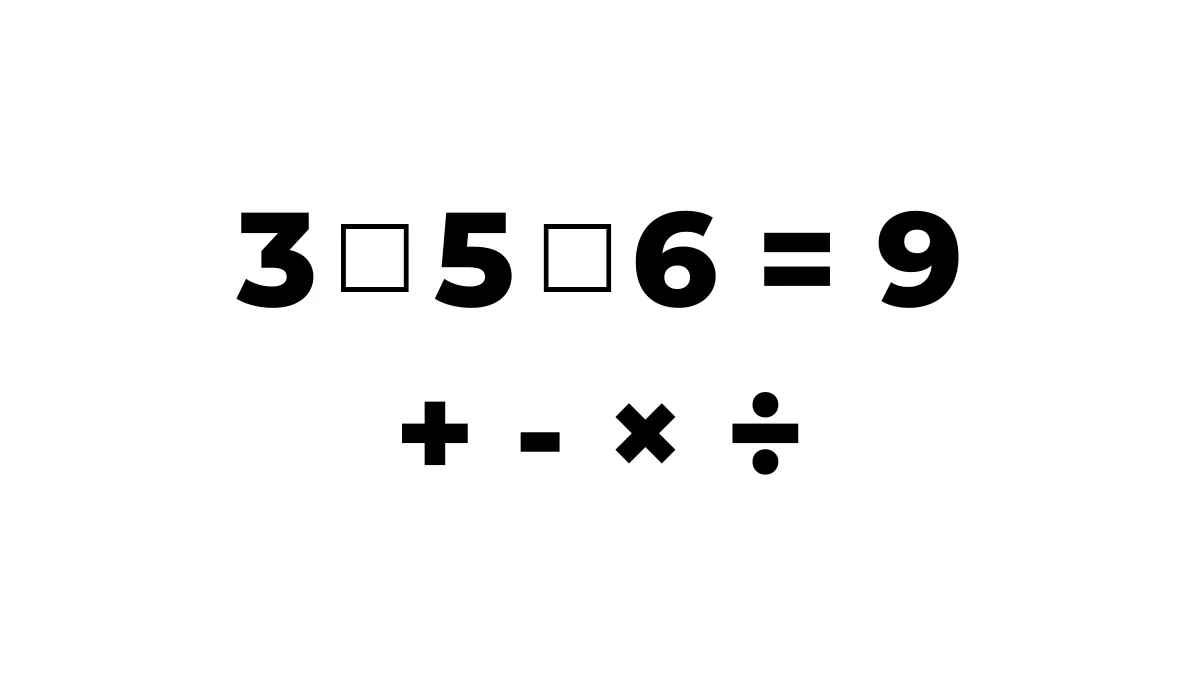
Here are some fun and simple math riddles to challenge young minds while keeping them entertained!
I am a number. Double me and add six, and you get 10. What number am I?
Answer: 2
I have three sides and three corners. What am I?
Answer: A triangle
If you put 3 apples in a basket and take away 2, how many do you have?
Answer: 2 (because you took them!)
What has four legs but can’t walk?
Answer: A table
If two’s company and three’s a crowd, what are four and five?
Answer: Nine! (4 + 5 = 9)
I am an even number. I am between 2 and 6. What number am I?
Answer: 4
What comes next in this pattern? 2, 4, 6, __?
Answer: 8 (the pattern increases by 2)
You have ten fingers on two hands. How many fingers do five people have altogether?
Answer: 50 (10 × 5 = 50)
Tricky Math Riddles to Challenge Kids
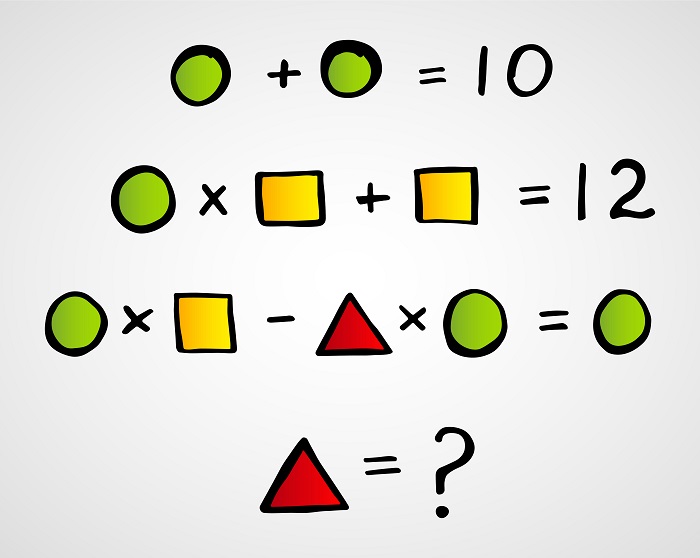
Get ready for some brain-teasing math riddles that will test kids’ logic and problem-solving skills!
A farmer has 10 sheep. All but 7 run away. How many are left?
Answer: 7 (because “all but 7” means 7 remain)
I add five to nine and get two. How is this possible?
Answer: A clock! 9 + 5 = 2 on a clock (14:00 = 2:00)
A soccer game ended with a score of 2-2, but not a single player scored a goal. How?
Answer: All players were married!
I am a number. Multiply me by any other number, and the answer will always be the same. What number am I?
Answer: 0
A car is going 60 miles per hour. How far will it go in 60 minutes?
Answer: 60 miles (since 60 minutes = 1 hour)
What three numbers add up to 12 but also multiply to 36?
Answer: 2, 2, and 6 (2 + 2 + 6 = 12, 2 × 2 × 6 = 36)
I am a two-digit number. My tens digit is double my ones digit. What number am I?
Answer: 42
There are 6 eggs in a basket. Six people take one egg each, yet one egg is still in the basket. How?
Answer: The last person took the basket with the egg inside!
Funny Math Riddles to Make Kids Laugh
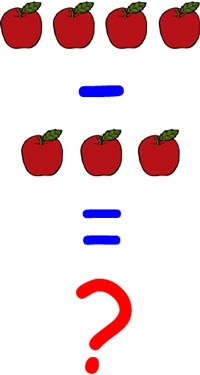
Here are some hilarious math riddles that will make kids giggle while they think!
Why was the equal sign so humble?
Answer: Because it knew it wasn’t < or > than anyone else!
Why did the math book look sad?
Answer: It had too many problems!
Why was the number 6 afraid of 7?
Answer: Because 7 8 (ate) 9!
I am a number that looks the same upside down and right side up. What number am I?
Answer: 8
If two’s company and three’s a crowd, what are four and five?
Answer: Nine! (4 + 5 = 9)
What did the zero say to the eight?
Answer: “Nice belt!”
Why did the student eat his math test?
Answer: Because the teacher said it was a piece of cake!
How do you make seven even?
Answer: Remove the “s” to make it “even”!
What’s a math teacher’s favorite place in NYC?
Answer: Times Square!
Why do plants hate math?
Answer: Because it gives them square roots!
Logic-Based Math Riddles for Critical Thinking
These math riddles will challenge kids to think logically and solve tricky puzzles!
I am a three-digit number. My tens digit is five more than my ones digit, and my hundreds digit is eight less than my tens digit. What number am I?
Answer: 194 (1 is eight less than 9, and 9 is five more than 4)
A grandfather, two fathers, and two sons go fishing. They each catch one fish, but there are only three fish in total. How is this possible?
Answer: They are a grandfather, a father, and a son—three people in total.
You see a line of 100 people. You start at the back and pass the person in front of you every second. How long will it take to reach the front?
Answer: 99 seconds (you only pass 99 people, not 100).
A train is moving at 100 mph. If it goes through a tunnel that is 100 miles long, how long will it take to get through?
Answer: 1 hour (100 miles ÷ 100 mph = 1 hour).
If two fathers and two sons sit down to eat three sandwiches, and each gets one, how is that possible?
Answer: They are a grandfather, father, and son (3 people total).
A farmer has 17 sheep, and all but 9 run away. How many does he have left?
Answer: 9 (because “all but 9” means 9 remain).
You are in a dark room with a candle, a wood stove, and a gas lamp. You only have one match. What do you light first?
Answer: The match!
A clock shows 3:15. What is the angle between the hour and minute hands?
Answer: 7.5° (Each hour is 30°, and the hour hand moves 7.5° in 15 minutes).
Three friends check into a hotel room that costs $30. They each contribute $10. Later, the hotel realizes the room was only $25, so the manager gives $5 back. Since they can’t split it evenly, they each take $1, and the bellboy keeps $2. Now, each friend paid $9 ($27 in total), plus the $2 the bellboy kept—where’s the missing dollar?
Answer: There is no missing dollar! The total payment is $25 (for the room) + $2 (bellboy) + $3 (returned to friends), which still equals $30. The riddle plays with misdirection.
Number Riddles to Boost Math Skills
These fun number riddles will help kids practice their math skills while having fun!
I am a two-digit number. My tens digit is double my ones digit. What number am I?
Answer: 42 (4 is double 2).
What three numbers add up to 12 but also multiply to 36?
Answer: 2, 2, and 6 (2 + 2 + 6 = 12, 2 × 2 × 6 = 36).
What number comes next in this pattern: 2, 6, 12, 20, __?
Answer: 30 (The pattern adds consecutive even numbers: +4, +6, +8, +10).
I am a number. When you multiply me by 4 and subtract 6, you get 18. What number am I?
Answer: 6 (6 × 4 = 24, 24 – 6 = 18).
A number is doubled and then increased by 9. The result is 25. What number is it?
Answer: 8 (8 × 2 = 16, 16 + 9 = 25).
Which number is missing? 3, 6, 9, __, 15, 18
Answer: 12 (Counting by 3s).
I am a number between 1 and 100. If you multiply me by 4, you get 100. What number am I?
Answer: 25 (25 × 4 = 100).
What two numbers add up to 10 and multiply to 24?
Answer: 6 and 4 (6 + 4 = 10, 6 × 4 = 24).
The sum of two numbers is 16, and their product is 55. What are the numbers?
Answer: 11 and 5 (11 + 5 = 16, 11 × 5 = 55).
I am a three-digit number. My tens digit is three times my ones digit, and my hundreds digit is half my tens digit. What number am I?
Answer: 162 (1 is half of 6, and 6 is three times 2).
Fun Facts About Math Riddles for Kids
-
Math Riddles Boost Brainpower!
Solving math riddles improves problem-solving skills, critical thinking, and logical reasoning.
-
They Make Math Fun!
Kids often find math challenging, but riddles turn numbers into a game, making learning enjoyable.
-
Ancient Civilizations Loved Math Riddles
The Egyptians and Greeks used math puzzles over 4,000 years ago to train young scholars!
-
Math Riddles Help with Memory
Just like puzzles, math riddles exercise the brain, improving focus and memory retention.
-
Some Riddles Have No Right Answer!
Some riddles trick your brain with multiple answers, teaching kids to think outside the box.
-
Einstein Loved Math Puzzles!
Albert Einstein was a big fan of math riddles and even created his own famous logic puzzle!
-
Math Riddles Are Everywhere!
From escape rooms to video games, math riddles are hidden in everyday life, helping us think smarter.
Frequently Asked Questions About Math Riddles for Kids
What Are Math Riddles?
Math riddles are fun brain teasers that involve numbers, patterns, and logic. They challenge kids to think creatively while improving their problem-solving skills.
Why Are Math Riddles Important for Kids?
Math riddles help kids:
✔ Develop critical thinking skills
✔ Improve mental math abilities
✔ Boost logical reasoning
✔ Make learning fun and engaging
What Age Group Are Math Riddles Best For?
Math riddles can be enjoyed by kids of all ages!
- Ages 4-6: Simple counting and number riddles
- Ages 7-10: Basic arithmetic and logic puzzles
- Ages 11+: More complex algebra and pattern-based riddles
Can Math Riddles Help With Learning Difficulties?
Yes! Math riddles can make learning less intimidating for kids who struggle with numbers by turning math into a game.
Conclusion About Math Riddles for Kids
Math riddles are more than just fun—they are powerful learning tools that help kids develop problem-solving, critical thinking, and logical reasoning skills.
By turning math into an engaging and playful activity, riddles can make numbers less intimidating and more exciting for children of all ages.
Whether kids are solving easy number puzzles or tackling tricky logic challenges, math riddles encourage them to think creatively and enjoy learning. They are perfect for use at home, in the classroom, or even during playtime.
By introducing math riddles regularly, parents and teachers can help children boost their confidence in math while having fun.
