



Welcome to the Riddle of the Day! Are you ready to challenge your mind, sharpen your thinking skills, and have a little fun?
Every day, we bring you a tricky, thought-provoking, and entertaining riddle to test your logic, creativity, and problem-solving abilities.
Riddles are more than just a fun pastime—they help improve critical thinking, memory, and cognitive flexibility.
Whether you’re solving them alone or competing with friends and family, they offer an exciting way to exercise your brain.
Some riddles are easy and playful, while others require deep thinking and clever reasoning. But one thing is for sure: every riddle will make you pause, think, and smile once you find the answer!
Today’s riddle is a tricky one, designed to stump even the sharpest minds. Think carefully, analyze the clues, and see if you can crack the code. Don’t worry if you get stuck—sometimes, the most unexpected answers are the most fun!
Challenge Your Mind with Today’s Riddle

- I have keys but open no locks.
I have space but no room.
You can enter, but you can’t go outside.
What am I?
Answer: A keyboard
- The more you take, the more you leave behind.
What am I?
Answer: Footsteps
- I can be cracked, made, told, and played.
What am I?
Answer: A joke
- I’m tall when I’m young and short when I’m old.
What am I?
Answer: A candle
- The more you use me, the smaller I become.
What am I?
Answer: A pencil
Why Solving Riddles Boosts Brainpower
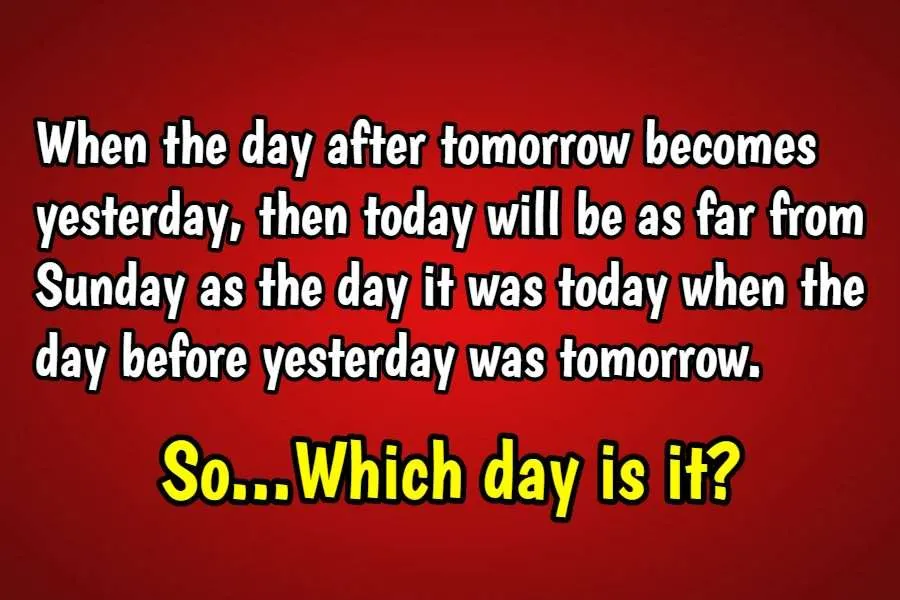
Riddles aren’t just fun—they’re a powerful workout for your brain! When you solve a riddle, you engage multiple cognitive functions, improving your mental agility, creativity, and problem-solving skills. Here’s why adding riddles to your daily routine can boost brainpower:
Enhances Critical Thinking
Riddles require logical reasoning and analytical skills to decode tricky clues. This strengthens your ability to think outside the box and find innovative solutions in real-life situations.
Improves Memory & Focus
Trying to recall past riddles, analyze patterns, and hold information in your working memory enhances concentration and cognitive retention.
Boosts Creativity
Many riddles have unexpected answers, forcing you to think in unconventional ways. This helps improve your creative problem-solving skills in everyday life.
Sharpens Decision-Making Skills
Riddles make you weigh different possibilities quickly, which translates to better decision-making abilities in high-pressure situations.
Reduces Stress & Improves Mood
Solving riddles releases dopamine, the “feel-good” neurotransmitter, making you feel accomplished and reducing stress levels.
Think Outside the Box – The Answer Might Surprise You!
Riddles are designed to trick your brain and challenge the way you think. The best ones often seem impossible at first, but with a little creativity, the answer suddenly clicks into place!
To solve tricky riddles, you need to:
Look at the question from a different angle
Avoid overcomplicating the problem
Consider wordplay and double meanings
Here’s one to test your outside-the-box thinking:
Riddle:
The more you take, the more you leave behind. What am I?
Think carefully before you scroll for the answer!
Answer: Footsteps!
Hints to Help You Solve the Riddle

Stuck on today’s Riddle of the Day? Don’t worry! Sometimes, the trickiest riddles have the simplest answers. Here are some helpful hints to guide you in the right direction:
Break It Down
Look at each word carefully. Is there a hidden meaning or a play on words? Riddles often use double meanings to mislead you!
Think Literally & Figuratively
Some riddles require literal thinking, while others rely on abstract reasoning. Try reading the riddle both ways.
Eliminate the Obvious
If an answer seems too easy, it might be a trick! Look for a less common interpretation of the words.
Ask Yourself Questions
- Does the riddle describe an object, concept, or action?
- Could the answer be something you see every day?
- Is there a hidden clue in the wording?
Fun Facts About riddle of the day
-
The Oldest Riddle Dates Back to 2350 BC!
The oldest recorded riddle was found in Ancient Sumer (modern-day Iraq). It asked:
“There is a house. One enters it blind and comes out seeing. What is it?”
Answer: A school!
-
The Most Famous Riddle in History
The Riddle of the Sphinx from Greek mythology is one of the most well-known riddles:
“What walks on four legs in the morning, two in the afternoon, and three in the evening?”
Answer: A human (crawling as a baby, walking as an adult, using a cane in old age).
-
Riddles Improve Brain Power
Solving riddles helps boost memory, problem-solving skills, and creativity, making them a fun mental workout!
-
Riddles Were Once a Form of Literature
In the Middle Ages, riddles were written as poetry, especially in Old English texts like the famous Exeter Book.
-
Riddles Are Universal
Every culture has its own unique riddles, from African folktales to Chinese word puzzles. They’re a timeless tradition of fun and learning!
Frequently Asked Questions About riddle of the day
What is the Riddle of the Day?
The Riddle of the Day is a daily brain teaser designed to challenge your thinking, boost creativity, and improve problem-solving skills. It can be a wordplay puzzle, logic challenge, or a classic riddle with a tricky twist!
How Can Riddles Help Improve Brain Power?
Solving riddles enhances critical thinking, memory, and concentration. They encourage you to think outside the box and sharpen your reasoning skills. Plus, they’re just plain fun!
Where Can I Find the Answer to the Riddle?
The answer is usually revealed at the bottom of the riddle post or in a separate section. But don’t peek too soon—give your brain a chance to solve it first! 😏
Can I Share the Riddle with Friends?
Absolutely! Riddles are meant to be shared. Challenge your friends, family, or coworkers and see who gets the answer first!
Conclusion About riddle of the day
Solving a Riddle of the Day isn’t just about having fun—it’s a great way to boost your brainpower, improve problem-solving skills, and think more creatively.
Whether you’re challenging yourself or competing with friends, riddles make every day a little more exciting!
By thinking outside the box, you train your mind to be sharper and more adaptable—skills that help in real life, too! Plus, riddles are a fantastic way to reduce stress and spark laughter with family and friends.
So, why not make solving riddles a daily habit? Keep your mind engaged, share the fun, and get ready for more brain-teasing challenges every day!
