


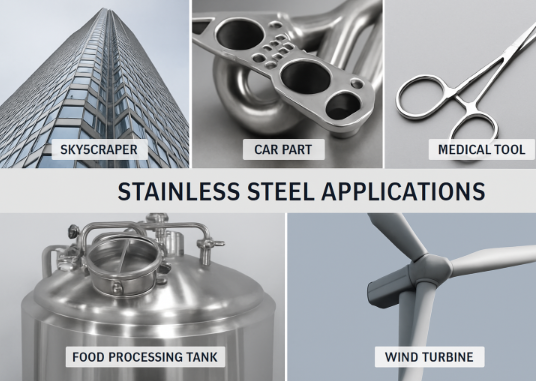
Stainless steel is a cornerstone of contemporary manufacturing due to its unique combination of corrosion resistance, durability, and adaptability. These qualities have secured its pivotal role in industries ranging from architecture and construction to healthcare and renewable energy. As the demand for materials that perform in harsh environments grows, stainless steel continues to lead innovation. For a deeper understanding of how specialty stainless steel products can meet complex industry requirements, visit https://www.specialtysteel.com/.
With ongoing advancements in alloy development and smart production processes, stainless steel is broadening its reach and influence. The material’s resilience makes it invaluable in applications where safety, longevity, and hygiene are non-negotiable. From metropolitan skylines to advanced medical devices, stainless steel sets the standard for reliability and strength in modern projects.
Construction and Architecture
Modern architecture often embraces stainless steel for its ability to deliver both strength and visual impact. Its application in structural elements, elaborate facades, and robust roofing is driven by the need for long-term solutions in urban design. Stainless steel’s low maintenance and exceptional lifespan make it well-suited to metropolitan areas susceptible to pollutants, as well as coastal regions exposed to saline air. Notably, large infrastructure projects use stainless steel to mitigate corrosion, resulting in significant savings on repair and replacement over time. According to Architectural Digest, the material’s integration in iconic landmarks highlights its versatility and sustainability.
Its smooth, reflective finish also appeals to designers seeking a modern aesthetic. Whether cladding skyscrapers or serving as handrails and bridge supports, stainless steel helps shape contemporary cityscapes, promising both safety and style in public spaces.
Automotive Industry
The automotive sector’s reliance on stainless steel has grown significantly. Its performance under stress and ability to endure extreme temperatures make it indispensable in parts such as exhaust systems, fuel tanks, and even body frames for specialized vehicles. With the industry’s accelerating shift toward electric vehicles, manufacturers increasingly favor stainless steel for battery enclosures and chassis components. This shift is motivated not only by a demand for lighter, stronger materials but also by a need to enhance vehicle lifespan and recyclability.
Stainless steel also supports the automotive sector’s push for improved safety and efficiency. Components must withstand constant vibration and resist exposure to moisture, salt, and temperature changes. Engineers are now designing lighter, more fuel-efficient vehicles using advanced stainless steel alloys. As a result, the material is at the heart of new breakthroughs in both performance and environmental standards.
Healthcare and Medical Equipment
Sterility is crucial in healthcare, and stainless steel is the preferred material for surgical tools and hospital equipment due to its non-reactive, non-porous properties. It withstands frequent sterilization, ensuring hygiene and safety. Its strength guarantees reliability for long-term medical implants and devices. Ongoing research and development reinforce its role in the healthcare sector, aligning with WHO guidelines that emphasize the use of sanitized materials to reduce hospital-acquired infections.
Food and Beverage Industry
Stainless steel serves as the backbone of the food and beverage processing industry, where hygiene is critical. Its impervious surface repels contaminants and prevents bacterial buildup, allowing for safe handling and storage of consumables. Tanks, mixers, piping, and utensils made of stainless steel facilitate easy sanitation and compliance with food safety regulations worldwide.
Processing plants particularly value stainless steel for its ability to resist acidic and alkaline substances encountered in food manufacturing. This attribute minimizes maintenance costs and eliminates the risks of flavor transfer or contamination. Its widespread use ensures that consumers receive products stored, processed, and transported in the cleanest possible environments.
Renewable Energy Sector
Stainless steel is instrumental in the global transition to renewable energy. Wind turbines require components that can withstand intensive mechanical and weather stress. Solar energy systems use stainless steel frameworks and attachments to maintain structural reliability through fluctuating temperatures and harsh sunlight. Additionally, hydroelectric applications call for stainless steel to resist corrosion from constant water flow and varying pH levels.
As the demand for resilient materials grows in the clean energy sector, stainless steel ensures optimal performance and a longer operational lifespan of renewable installations. This makes it foundational to sustainable infrastructure that powers today’s society while safeguarding the environment for future generations.
Advancements in Stainless Steel Technology
New manufacturing techniques are enhancing stainless steel’s capabilities through advanced alloy development, increasing resistance to wear, heat, and chemical exposure. This allows it to be used in more demanding applications. Smart manufacturing, leveraging AI and data analytics, facilitates real-time production monitoring to maintain quality and efficiency. Additionally, innovations such as 3D printing are enabling the creation of precision components and custom designs across the medical, industrial, and automotive sectors, making stainless steel more adaptable and essential to technological advancement.
Conclusion
Stainless steel’s exceptional properties have garnered it a permanent role in numerous essential industries. Its adaptability supports advances in architecture, automotive design, healthcare, food processing, and green energy. Driven by continuous advances in materials science and manufacturing methods, stainless steel is poised to meet evolving industrial needs with confidence. Its ongoing evolution guarantees that it will remain at the forefront of innovation, ensuring safety, efficiency, and sustainability for years to come.
