


You clean your pet’s ears, use the drops exactly as directed, and for a week or two it seems better. Then the scratching starts again, the smell comes back, and you are right back where you started. That cycle wears people down. It is frustrating, expensive, and hard to watch when your dog or cat is clearly uncomfortable, which is why getting help from an animal hospital in Coral Springs can make a difference.
Persistent ear disease usually means there is more going on than simple wax buildup or a short term infection. A veterinary hospital diagnosis for chronic ear infections looks past the surface problem and searches for the reason the ear keeps flaring up. That often includes an ear exam, microscope testing, imaging in harder cases, and a plan that treats both the infection and the cause behind it.
Persistent ear disease has a cause that needs to be found
Recurring ear trouble is rarely random. Many pets have an underlying trigger such as allergies, excess moisture, ear mites, endocrine disease, foreign material in the ear canal, growths, or a shape of the ear canal that traps debris. Infection is often the result, not the starting point. If the root cause stays in place, the infection keeps returning no matter how many times the ear is cleaned.
You may have already seen this pattern. The ear looks red, your pet shakes their head, there is dark discharge, and the medication seems to help. Then a month later the same ear is inflamed again, or the other ear starts doing the same thing. That repeated inflammation can thicken the ear canal over time, making treatment harder and more costly.
This is why how vets diagnose chronic ear problems matters so much. The goal is not just to calm a flare. The goal is to learn whether yeast, bacteria, inflammation, allergy, pain deeper in the canal, or a damaged eardrum is part of the picture.
Veterinary hospitals use testing to identify what is inside the ear
The first step is usually a detailed history. When did the problem start, which ear is affected, what treatments have already been tried, and does your pet also lick their paws or have skin issues? Those details often point toward allergy or another broader condition.
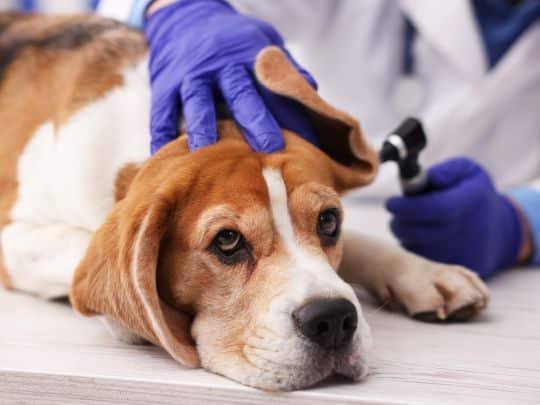
A physical exam and otoscopic exam come next. The otoscope lets the veterinary team look down the ear canal for redness, swelling, discharge, mites, masses, grass awns, and eardrum changes. In painful ears, a full view may not be possible during a routine visit. Some pets need sedation so the ear can be examined and cleaned safely without adding more stress or pain.
Cytology is one of the most useful tools in a persistent ear infection diagnosis. A sample of ear debris is placed on a slide and checked under the microscope. This shows whether yeast, cocci bacteria, rod shaped bacteria, or inflammatory cells are present. That matters because the treatment for yeast is not the same as the treatment for resistant bacteria.
When infections keep coming back or fail to respond, culture and sensitivity testing may be recommended. This identifies the specific bacteria and shows which medications are likely to work. In chronic cases, this can prevent weeks of trial and error.
Some pets need more than ear testing. If allergy is driving the inflammation, the ears will not stay healthy until the allergy is managed. Bloodwork, skin assessment, diet trials, or referral level imaging may be part of the plan. Educational resources from the UC Davis otitis externa bootcamp program and the University of Tennessee overview on ear disease both reflect how layered these cases can be when inflammation becomes chronic.
Chronic ear cases become more serious when treatment is delayed or incomplete
An ear infection that lingers can change the ear canal itself. Chronic inflammation may narrow the canal, increase wax production, and create a warm, moist space where yeast and bacteria thrive. Some pets also develop middle ear disease, where infection or inflammation extends beyond the outer canal. At that point, routine drops may not reach the full problem.
This is where owners often feel stuck. More visits, more medication, more cleaning, and no clear finish line. The cost rises because the case has become harder, not because anyone missed the obvious. Ear disease is one of those problems that can look simple at home and turn out to be much more stubborn once the canal has been inflamed for months.
Home care and veterinary hospital care are not equal in persistent ear disease
| Approach | What It Can Do | Main Limits |
|---|---|---|
| Home cleaning only | Removes some surface debris and may reduce mild wax buildup | Does not identify yeast, bacteria, mites, eardrum damage, or deeper disease |
| Leftover ear medication | May briefly reduce visible redness or discharge | Can be the wrong drug for the organism and may delay proper diagnosis |
| Veterinary ear cytology | Shows what organisms are present and guides treatment choice | Needs an in person exam and may need repeat checks |
| Culture and sensitivity | Helps target resistant or recurring bacterial infections | Takes more time and is usually used for stubborn cases |
| Sedated exam and deep cleaning | Allows a full exam, better flushing, and a clearer look at the canal and eardrum | Added cost and not needed for every pet |
Three steps you can take right away
- Stop reusing old ear medication. Ear disease changes over time. What helped six months ago may be useless now, especially if the current problem is yeast instead of bacteria, or if the eardrum is no longer intact.
- Track the pattern before the appointment. Write down when the scratching started, what the discharge looks like, whether there is odor, and what treatments have already been used. If your pet also has itchy skin, paw licking, or seasonal flares, mention that. Those details often point to the root cause faster.
- Ask for the full plan, not just the first medication. You want to know what was seen on exam, what the cytology showed, whether follow up is needed, and what underlying cause is suspected. That is how a standard ear infection visit turns into a real plan for long term control.
Getting ahead of ear disease starts with the right diagnosis
Persistent ear disease is exhausting, and it can make you feel like nothing works. The pattern usually makes sense once the ear is examined closely and the underlying cause is identified. A good veterinary hospital does more than prescribe drops. It builds a treatment plan around what is actually happening in your pet’s ear and what keeps bringing the problem back.
If your pet’s ear problems keep returning, schedule an exam with a veterinary hospital and ask for a thorough workup for chronic ear disease. Early answers usually mean less pain for your pet and fewer repeat treatments for you.
