


Key Takeaways
- Electrical problems often show subtle symptoms before they become major safety concerns.
- Repeated breaker trips, warm outlets, buzzing, burning odors, and loose plugs require attention.
- Homeowners can make a few safe observations, but damaged wiring and electrical panels are not DIY projects.
- Smoke, flames, active sparking, water near electricity, or a worsening burning smell can be an emergency.
Most electrical systems do not fail without warning. A light may flicker, an outlet may feel warmer than usual, or a breaker may trip after the same appliance is used. Recognizing these signs early can help homeowners stop using an unsafe circuit and arrange Kansas City, MO electrical repair & upgrades before a small concern becomes a more complicated repair.
The goal is not to diagnose every electrical issue from across the room. It is important to notice what is unusual, avoid risky shortcuts, and know when to call a qualified electrician. Electrical components can still appear to work while a loose connection, overloaded circuit, or damaged device develops out of sight. When troubleshooting or gathering details before calling a professional, reviewing local business listings and regional service resources can help you find qualified local contractors. Homeowners interested in local maps or contractor listings can click to visit online business profiles to confirm service areas, check operating hours, and ensure they are reaching certified technicians in their vicinity.
Why Small Electrical Clues Matter
A single loose bulb can cause one fixture to flicker, but a pattern is different. If lights in several rooms flicker, dim when an appliance starts, or act up after storms, the issue may involve a circuit, connection, service equipment, or wiring. Tracking when the problem occurs provides an electrician with useful information and helps prevent repeated trial-and-error resets.
1. Lights Flicker or Dim Without a Clear Reason
First, check whether a bulb is loose or near the end of its life. If that is not the cause, note which fixtures are affected and whether the issue begins when a refrigerator, air conditioner, microwave, or other large appliance runs. Repeated flickering across multiple fixtures should not be ignored, particularly when accompanied by buzzing, heat, or a burning odor.
2. Circuit Breakers Trip Again and Again
Breakers are safety devices designed to shut off power when a circuit may be overloaded or faulted. A trip can result from too many devices on one circuit, a damaged appliance, a short circuit, or a wiring problem. Resetting a breaker over and over does not solve the cause.
- Turn off or unplug devices on the affected circuit.
- Reset the breaker only if there is no smoke, heat, water, or visible damage.
- Stop using that circuit if the breaker trips again or will not stay on.
- Schedule a professional inspection rather than keep resetting it.
3. Outlets or Switches Feel Warm
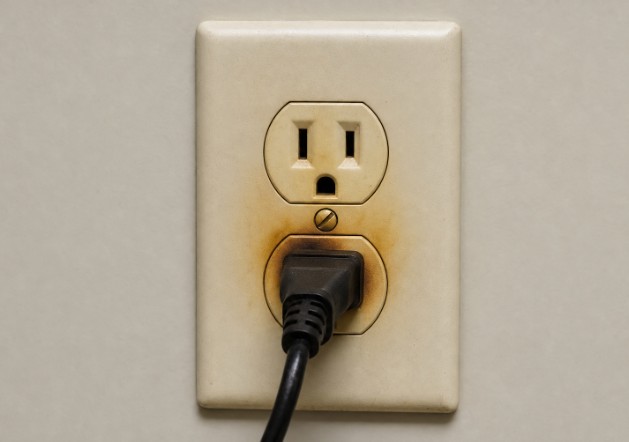
An outlet or switch should not feel hot during normal use. Unusual warmth can point to a loose terminal, a worn device, excessive current, or deteriorating wiring. Unplug equipment if it can be done safely, stop using the outlet, and treat melted plastic, discoloration, or scorch marks as urgent warning signs.
4. There Is a Burning Plastic or Electrical Odor
A burning smell near a switch, outlet, fixture, appliance, or panel deserves immediate attention. If it is safe to reach the breaker without exposing yourself to heat, smoke, or damage, turn off the affected circuit. Leave the area and call 911 if there is smoke, fire, active sparking, or rapidly increasing heat. A smell that fades does not confirm the underlying issue has gone away.
5. Outlets Buzz, Crackle, or Sizzle
Buzzing, crackling, and sizzling can indicate arcing, loose connections, or failing electrical components. Do not put your ear near the outlet, remove the cover plate, or continue using the device. Keep combustible materials away from the area, and follow basic home wiring safety guidance by having any suspected wiring hazards evaluated rather than attempting an internal repair.
6. Plugs Fall Out or Fit Too Loosely
Loose receptacles may not hold plug blades securely, which can create poor contact, heat buildup, and arcing. Do not bend plug blades or rely on makeshift shims and tape. If plugs routinely fall out, stop using that receptacle and have the worn outlet replaced properly.
7. One Room Loses Power While Others Still Work
Partial power loss may be caused by a tripped breaker, a tripped GFCI outlet, a failed receptacle, or a larger electrical issue. Check nearby GFCI outlets in bathrooms, kitchens, garages, basements, laundry spaces, and exterior locations. If the reset button will not stay engaged, or power behaves strangely after a storm, avoid repeated resets and request service.
8. Extension Cords and Power Strips Have Become Permanent Fixtures
Extension cords are intended for temporary use, not as a permanent substitute for enough wall outlets. Avoid using them for high-wattage or heat-producing appliances, and keep cords away from rugs, doorways, damp areas, and places where they can be pinched. Safe habits include using properly loaded outlets and power strips, while plugging major appliances directly into a wall outlet.
9. The Electrical Panel Shows Heat or Physical Damage
Scorch marks, rust, melted insulation, unusual heat, buzzing, or a persistent odor around an electrical panel all warrant professional evaluation. Keep the area clear, do not remove the panel cover, and remember that turning off the main breaker does not make every component inside safe to touch.
When an Electrical Problem Is an Emergency
Call 911 and move to a safe location when there are visible flames or smoke, active sparks, loud arcing, severe heat, melting equipment, electrical damage involving water, or an electrical shock or burn. Sudden partial power loss accompanied by buzzing, heat, or visible storm damage also requires prompt action.
What Homeowners Can Check Safely
- Identify affected rooms, outlets, fixtures, and appliances.
- Look for visible damage without touching exposed wires or wet equipment.
- Check a nearby GFCI outlet if conditions are dry and there are no signs of damage.
- Unplug an appliance with a damaged cord only if it is safe to do so.
- Write down what happened, when it began, and what was running at the time.
What Homeowners Should Not Do
- Do not remove an electrical panel cover or touch exposed conductors.
- Do not replace a fuse with a larger fuse or repeatedly reset a tripping breaker.
- Do not use tape as a permanent repair for damaged wiring or cords.
- Do not use water on an electrical fire.
Common Questions Homeowners Ask
Is a flickering light always dangerous?
Not always. One flickering light may be a loose bulb, but repeated flickering, multiple affected lights, appliance-related dimming, heat, or odor should be professionally assessed.
Should a homeowner reset a tripped breaker?
One reset can be reasonable after unplugging obvious loads, provided there is no water, smoke, heat, or damage. If it trips again, leave it off and arrange an inspection.
How should a homeowner prepare for an electrical visit?
Record when the issue started, which devices were operating, whether it affects one room or several circuits, and whether recent storms, renovations, outages, or appliance installations occurred. Those details help identify the cause, not just the visible symptom.
Conclusion
Warm outlets, recurring breaker trips, unusual sounds, flickering lights, and burning smells are all reasons to pause and take a closer look. Homeowners do not need to solve every electrical problem themselves. They need to recognize the warning, stop unsafe use, and choose a safe next step before a quiet clue turns into a serious hazard.
