


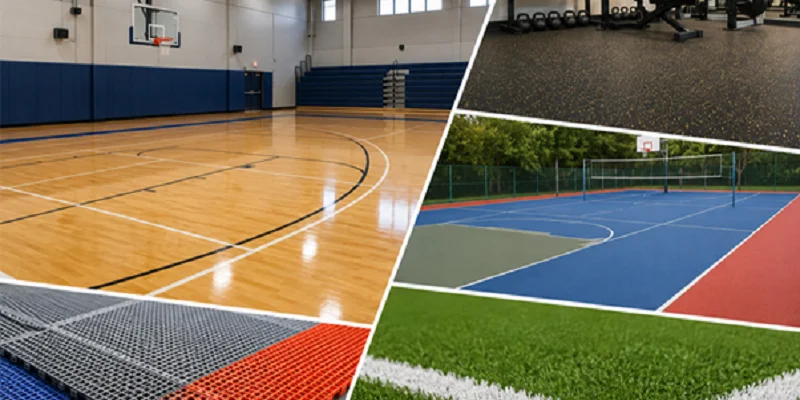
A quality sport court surface is more than a layer of attractive color beneath players’ feet. The surface directly influences traction, ball response, comfort, durability, maintenance requirements, and the overall playing experience. Whether the project involves a basketball court, tennis court, pickleball facility, volleyball court, or a multi-purpose sports area, choosing the right surfacing system is an important long-term decision.
Modern sports surfaces are available in several materials and construction systems, each designed to meet different performance and environmental requirements. Lisheng Sports, for example, provides a range of sports surface materials and court systems for venues including basketball, tennis, pickleball, badminton, and volleyball courts.
Why Sport Court Surfaces Matter
The playing surface affects how athletes move and interact with the court. A surface that provides the right combination of grip and controlled movement can help players make quick changes of direction while maintaining confidence underfoot.
Surface construction can also influence impact comfort. Courts with cushioning characteristics can provide a more forgiving feel during repeated jumping, running, and landing. This can be particularly valuable in facilities that receive frequent daily use.
Durability is another major consideration. Outdoor courts are exposed to sunlight, rain, temperature changes, dirt, and repeated mechanical wear. A suitable surface system should therefore be selected according to both the sport and the conditions in which the facility will operate.
Common Types of Sport Court Surfaces
Acrylic Court Systems
Acrylic surfaces are widely used for outdoor sports courts because they can provide a consistent playing surface with relatively straightforward maintenance. Hard acrylic systems are generally suited to projects where a firm, responsive court is desired.
Cushioned acrylic systems add resilient layers beneath the playing surface. This creates a different underfoot experience and can improve comfort compared with a completely hard court.
The choice between hard and cushioned acrylic should depend on factors such as the sport, expected traffic, existing substrate, budget, and desired level of player comfort.
Silicone PU Court Systems
Silicone PU, or SPU, combines polyurethane-based elasticity with properties intended for durable outdoor court use. Lisheng describes its Silicone PU Court System as a hybrid elastic sports surface designed to balance comfort, performance, and durability. It is listed for applications including basketball, tennis, and pickleball.
This type of system can be particularly interesting for facilities where cushioning and weather resistance are important. Lisheng’s published specifications for its SPU system include shock absorption, slip resistance, tensile strength, and elongation characteristics.
The Importance of the Surface Structure
A professional sports court is normally built as a system rather than a single material. The condition of the underlying concrete or asphalt, primers, base layers, elastic layers, and finishing coats can all contribute to the final performance.
For this reason, simply comparing the price of two surface materials may not provide a complete picture. A lower-cost coating may not deliver the same performance if the preparation, layer structure, or installation method is unsuitable.
When sourcing materials, working with a reliable sport court factory can also make it easier to understand the complete system rather than purchasing individual products without considering how they work together.
Weather Resistance for Outdoor Courts
Outdoor sports courts face challenges that indoor facilities do not. UV exposure, rainfall, humidity, temperature fluctuations, and airborne pollutants can gradually affect surface appearance and performance.
Material selection should therefore take the local climate into account. Lisheng states that its sports surface materials are developed for durability and weather resistance, while its customization services can adjust formulations according to requirements such as venue performance, thickness, color, and environmental conditions.
For projects in hot or highly exposed locations, asking about UV stability and long-term weather performance before installation can help avoid unnecessary resurfacing problems later.
Where Polyurethane Coatings Fit In
Polyurethane technology is used in several sports surfacing applications. One example is Polyurethane Spray Coating, which Lisheng describes as a two-component liquid system designed as a final wear layer for running tracks and EPDM surfaces. It is intended to provide a flexible, seamless membrane with resistance to UV exposure, ozone, abrasion, and weather conditions.
While this particular product is primarily described for tracks and EPDM recreational surfaces rather than conventional hard courts, it illustrates how specialized polyurethane layers can be engineered to provide protection, flexibility, and long-term surface performance.
Consider the Sport Before Choosing the Material
Different sports place different demands on a court. Basketball players need reliable traction and consistent ball response. Tennis requires predictable movement and bounce characteristics. Pickleball facilities need a surface that supports fast lateral movement and frequent play.
Multi-purpose facilities have another challenge: the surface must provide an acceptable balance for several activities rather than being optimized for only one.
Facility managers should therefore consider:
- The primary sport or sports played on the court
- Indoor or outdoor installation
- Expected daily traffic
- Local weather conditions
- Desired cushioning and comfort
- Slip resistance
- Cleaning and maintenance requirements
- Existing substrate condition
- Available installation budget
- Expected service life
Installation Quality Is Just as Important
Even a high-quality material can perform poorly if the installation process is inadequate. The substrate needs to be properly prepared, clean, level, and suitable for the selected system. Application thickness, curing conditions, moisture, temperature, and layer compatibility can also influence the finished result.
Lisheng says it provides material-use guidance, construction-process training, technical consultation, and, when necessary, on-site technical assistance.
This type of technical support can be valuable for contractors and facility owners who are working with a particular surfacing system for the first time.
Think About Long-Term Maintenance
Selecting a sport court surface should not end when construction is complete. Regular cleaning and timely repairs can help maintain appearance and playing characteristics.
Facility operators should establish a simple maintenance routine that includes removing dirt and debris, checking for cracks or damaged areas, monitoring drainage, and addressing surface problems before they become larger issues.
Outdoor courts should receive particular attention after severe weather or periods of heavy use. Small defects are generally easier to manage when identified early.
Final Thoughts
The right sport court surface can make a significant difference to player comfort, performance, safety, and the long-term value of a sports facility. Acrylic, cushioned acrylic, silicone PU, polyurethane-based materials, and other specialized systems each have different characteristics and applications.
Rather than choosing a surface based solely on appearance or initial price, project owners should consider the sport, climate, traffic level, substrate, performance expectations, and maintenance requirements together.
For businesses, schools, sports clubs, contractors, and developers planning a new facility or renovation, reviewing complete material systems and technical support options can make the selection process much easier.
