


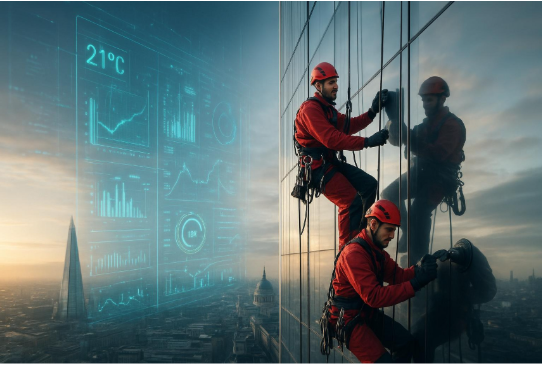
Smart maintenance is critical for tall buildings in cities because complex building systems and tight urban spaces make old-style “fix it when it breaks” upkeep very costly and unsafe. By using data and connected tools, facility managers can move from a “run-to-fail” model to a predictive model that spots problems before they happen.
This proactive method keeps key systems-from lifts to air conditioning-working properly, protecting thousands of people and the long-term value of the building.
In modern cities, looking after a skyscraper takes much more than a basic cleaning team; it needs a connected digital setup. For example, when structural or facade checks are needed at great height, data from smart sensors can guide the use of specialist rope access companies in the UK for focused repairs. This mix of high-tech monitoring and skilled hands-on work is a key part of a successful smart maintenance plan.
What Makes Smart Maintenance Critical for Tall Buildings in Urban Areas?
Why Urban Density Makes Maintenance Harder
In busy city centres, nearby buildings and constant foot and vehicle traffic create serious obstacles for maintenance. Bringing in heavy equipment or setting up large repair areas often needs special permits and work at off-peak times to avoid blocking roads. On top of that, the “urban heat island” effect and local pollution speed up wear on facades, so city towers need more frequent and smarter checks than rural buildings.
Dense cities also mean that a single failure can affect far more than one tenant. A burst pipe in a high-rise can disrupt local utilities and impact hundreds of homes and businesses. Smart maintenance cuts these risks by giving the “early warning, accuracy, and flexibility” needed to manage assets that function like vertical neighborhoods.
How Tall Building Systems Differ From Low-Rise Structures
Tall buildings are not just stretched versions of smaller offices; they are complex systems with their own mechanical demands. For example, plumbing in high-rises must handle large pressure changes over many floors, while HVAC systems must deal with the “stack effect”-air moving through stairwells and lift shafts due to temperature differences. These forces barely exist in low-rise buildings.
The height of these towers also puts huge importance on lifts and other vertical transport. In a short building, a broken lift is annoying; in a 60-storey tower, it is a serious failure that can stop work and affect safe evacuation. Maintenance plans for these systems need to be much stronger, using live data to keep them running round the clock.
Common Maintenance Challenges in City High-Rises
A major ongoing problem is “technical fragmentation.” Many towers contain a mix of brands and ages of equipment, from decades-old boilers to brand-new digital controls. Getting a 20-year-old boiler to talk to a modern cloud-based AI system has usually been an expensive and difficult job that many facility managers struggle with.
The environment adds more pressure. High-rises face strong wind loads that can affect structural parts over time, calling for regular checks. User diversity is another factor: ground-floor shops, office tenants, and residents on upper floors all have different needs for comfort and security, so a single maintenance plan cannot suit everyone.
Key Technologies Driving Smart Maintenance Strategies
IoT-Enabled Sensors for Real-Time Building Monitoring
The Internet of Things (IoT) acts like the “central nervous system” of a smart building. Small wireless sensors, including those using LoRaWAN, can be placed in hard-to-reach spots such as ceiling voids or motor housings without expensive data cabling. These sensors measure vibration, temperature, humidity, and more, sending a steady flow of health data.
By tracking a motor’s vibration “signature,” a sensor can spot worn bearings long before they overheat or seize. The maintenance team can then replace a cheap part during planned work, avoiding a major breakdown that could cut cooling to a whole floor and require a costly full motor replacement.
Building Management Systems (BMS) and Data Integration
A modern Building Management System (BMS) acts as the brain of the tower, bringing different systems into one view. Newer platforms work like “universal translators,” taking in data from BACnet, Modbus, M-Bus, and other protocols at the same time. By turning these formats into a common language, facility managers can see the full picture of building performance in real time.
Good integration allows “centralized data collection,” which helps reveal links between systems. For example, a BMS might notice that electrical spikes on one floor always come just before an HVAC fault. Technicians can then check the power distribution before the cooling on that floor fails completely.
Predictive Analytics and Machine Learning Applications
Artificial Intelligence (AI) and Machine Learning (ML) turn raw readings into clear guidance. By looking at past performance, these tools can spot patterns that mean a failure is close. This shifts the maintenance team away from fixed time-based visits to a “data-based best practice,” where work happens only when needed.
Machine learning models keep improving as they receive more data. In a high-rise, an AI system might learn how the facade reacts to certain wind speeds and sunlight, and then automatically adjust HVAC loads to keep people comfortable while cutting energy use.
Proactive Maintenance Approaches for Tall Urban Buildings
Preventive Maintenance Versus Predictive Maintenance: What Is the Difference?
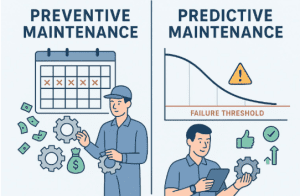
Preventive maintenance is based on time or usage, similar to changing car oil every 5,000 miles. It is better than waiting for a failure, but it often leads to “over-maintenance,” where working parts are replaced early, wasting money and materials. It does not reflect the real condition of the asset.
Predictive maintenance is based on actual condition. It uses live data from IoT sensors to show when service is truly needed. Work is carried out only when the data suggests a likely failure, cutting labour costs and avoiding surprise breakdowns.
How Remote Monitoring Reduces Downtime and Costs
Remote monitoring lets facility managers spot and handle problems from afar, often before building users notice anything. Through real-time dashboards and custom charts, managers can get instant alerts when values-like boiler pressure or lift alignment-move outside normal ranges.
Industry studies show that using these remote tools can cut building downtime by up to half. It also reduces manual checks, which are especially time-consuming in tall buildings where moving between floors and reaching roof plant rooms can take a large share of a technician’s day.
Digital Documentation and Maintenance Scheduling
Moving to digital records keeps every repair, inspection, and sensor alert in one searchable system. This history helps “train” predictive tools and supports proof of compliance during safety checks. It also removes “knowledge silos” where only long-serving staff know the true maintenance history.
Smart scheduling tools can group tasks to reduce disruption. If a technician is already sent to a high floor for an HVAC job, the system can flag other small tasks nearby, such as changing lights or testing alarms, so each visit delivers as much value as possible.
Critical Building Systems Requiring Smart Maintenance
HVAC: Keeping Air Quality and Efficiency at Height
In tall commercial towers, HVAC systems use a large share of total energy. Smart maintenance tracks fans, pumps, and chillers with vibration and performance sensors to keep them running efficiently. This cuts energy bills and keeps indoor air clean, which directly affects health and productivity.
Advanced BMS setups can also vary air flow based on real-time occupancy. If a meeting room is empty, the system can reduce heating, cooling, and ventilation there, saving energy without affecting comfort elsewhere.
Elevators and Vertical Transport: Monitoring for Safety and Reliability
Lifts are the backbone of movement in high-rises. Smart maintenance focuses on how often doors cycle and how accurately cars level with each floor. If a lift starts taking slightly longer to level, it may point to brake drag or cable stretch.
By tracking these trends through an IoT gateway, managers can call technicians only when a set safety limit is close. This avoids frequent “out of order” signs and keeps vertical transport dependable in a building that runs 24/7.
Power Distribution and Emergency Systems: Avoiding Urban Outages
Many electrical fires and equipment failures in towers come from poor power quality. Smart maintenance monitors Total Harmonic Distortion (THD) and phase imbalance. With Modbus power meters, facility teams can spot electrical noise that could damage IT equipment or show that a transformer is failing.
Backup power systems, including generators and UPS units, also need remote checks. Automatic testing makes sure they can start instantly during a city power cut, keeping life safety systems and data centres running.
Plumbing and Water Management in High-Rise Buildings
Water damage is a major source of insurance claims in commercial properties. Smart water meters can analyse flow patterns to find “micro-leaks”-very small drips when use should be near zero, such as during the night. Finding these early helps crews fix weak joints before they cause serious flooding.
In a high-rise, a leak on the 40th floor can cause huge damage to many levels below. Predictive water management is therefore a key risk control step that protects both the building fabric and its digital equipment.
Fire Detection, Evacuation, and Life Safety Systems
Fire safety in skyscrapers is highly complex because of the difficulty of moving people vertically. Smart systems link fire alarms with the BMS to send instant alerts and trigger automatic actions, such as pressurising stairwells to keep smoke out. Regular digital testing of detectors and sprinklers helps meet strict legal rules.
Passive fire protection is also very important. Using materials and layouts that slow fire spread reduces damage even without active systems. Smart maintenance records provide detailed proof that these defenses are kept up to standard.
Addressing Unique Urban Challenges in Maintenance Planning
Managing Restricted Access and High-Traffic Environments
In dense city areas, moving people and materials into and around a building is difficult. Smart planning means scheduling work outside peak hours and using digital tools to keep occupants informed of noise, access limits, or system shutdowns. Clear communication builds trust and reduces frustration.
Security adds another layer. Controlled entrances and AI-based cameras must fit into the maintenance workflow so only approved contractors are on-site, especially in sensitive zones like data rooms or roof plants.
Mitigating Environmental Impacts: Wind Load, Pollution, and Temperature Extremes
Tall towers are heavily affected by weather. Wind puts stress on the structure, so regular checks of sway and strain are needed. Smart sensors can measure this movement, giving engineers data to adjust dampers and other stability systems.
City pollution and heat also cause faster wear. Facades, seals, and coatings age more quickly in dirty air, increasing the need for specialist cleaning and inspections to keep energy performance high. Tracking these effects helps extend the life of cladding and glazing and keeps the building looking professional.
Coordinating Maintenance With Multiple Building Stakeholders
Many tall buildings are “mixed-use,” combining shops, offices, and homes. Each group has different noise limits and service expectations. Office tenants may want quiet days; residents expect quiet nights. Asset managers must juggle these needs around the clock.
Creating a shared “occupier culture” through apps and online portals helps set clear expectations. Regular updates about planned work and likely impact can reduce complaints, lower churn, and support a stable, satisfied community.
Key Considerations for Successful Smart Maintenance Deployment
Integrating Legacy Systems With New Technologies
A major barrier to smart maintenance is the existing “patchwork” of older equipment. The answer is to aim for open, shared communication standards. With hardware that translates between protocols, facility teams can link old boilers and chillers to modern AI platforms in hours, turning a conventional tower into a predictive one.
This link makes “data historization” possible-storing and using past performance records to train algorithms. Without this bridge between old and new systems, most established high-rise portfolios cannot gain the full benefits of predictive maintenance.
Addressing Cyber Security and Data Privacy Risks
As buildings connect more devices and systems, they become more open to cyber attacks. Protecting the large volumes of collected data is a top concern. Strong cyber security and clear data policies are needed to keep tenant information and control systems safe.
Facility managers need to work closely with IT teams so IoT gateways and cloud services stay secure. This includes frequent software updates, encryption for data in transit and at rest, and strict user access rules for control platforms.
Training Facility Management Staff on Smart Tools
Technology only delivers value when staff know how to use it. Adopting smart tools requires technicians and managers who can read dashboards, understand alerts, and respond correctly. Ongoing training and education help staff shift from manual checks and clipboards to data-led decision making.
Bodies like the International Facility Management Association (IFMA) offer courses and networks to help professionals keep up with these changes. Giving teams the skills to read AI-driven insights is a key step toward successful smart maintenance.
Benefits of Implementing Smart Maintenance in Tall Urban Buildings
Extending Asset Life and Increasing Property Value
By dealing with issues early, smart maintenance reduces stress on costly assets. This lengthens the life of core systems such as HVAC, lifts, and power gear, protecting investment returns and helping the property remain attractive for many years.
Well-maintained buildings are more appealing to buyers and high-quality tenants. A safe, efficient, and reliable workplace or home, often maintained by the experts at Rope Access in London, allows owners to charge higher rents and keep vacancies low, improving financial performance.
Improving Occupant Comfort and Safety
Smart maintenance keeps heating, cooling, lighting, and lifts running smoothly, raising satisfaction levels for everyone using the building. Fast and targeted fixes build confidence and support a professional atmosphere.
Safety also improves. Regular monitoring of fire systems, power quality, and structural health helps catch hazards early, lowering the chance of serious incidents and protecting lives.
Reducing Operational Costs and Energy Consumption
Predictive methods can cut maintenance spend by up to 25% by avoiding emergency callouts and reducing unnecessary checks. Keeping equipment working efficiently also trims energy bills and lowers total resource use.
By spotting hidden leaks and electrical losses, smart systems prevent waste of water and power. In a large tower, even a small percentage gain in efficiency can save tens of thousands of pounds each year.
Supporting Sustainability and Compliance Goals
Smart buildings play a key role in sustainable city planning. By fine-tuning energy and water use and linking to renewables, they shrink their carbon footprint. Detailed data records also make it easier to prove compliance with environmental and safety rules.
Features such as rainwater capture and intelligent lighting controls support wider green targets and strengthen the building’s image as an environmentally responsible choice, which matters more as cities aim for “net-zero” emissions.
Looking Ahead: Trends Shaping the Future of Smart Maintenance for Urban High-Rises
The Role of Artificial Intelligence in Autonomous Maintenance
Buildings are moving from “smart” to increasingly autonomous. AI systems will soon be able to forecast failures, trigger repair workflows, and even order spare parts automatically based on usage and age. This level of automation will cut the need for on-site visits and reduce human error.
As AI becomes more deeply built in, towers will behave more like “living systems” that adjust instantly to weather, usage, and grid conditions. Facility managers will spend less time on day-to-day faults and more time on guiding overall building performance and strategy.
Building Digital Twins for Predictive Maintenance Modeling
A Digital Twin is a virtual copy of a real building that updates in real time using sensor data. It lets managers test “what-if” cases and see how changes in one area affect the rest. For example, they can model the impact of a heatwave on HVAC capacity before it happens.
Digital twins are powerful tools for designing for resilience. By simulating how a building behaves during earthquakes, storms, or floods, engineers can set smarter maintenance plans that keep it safe and usable during extreme events. This turns maintenance into a key part of risk reduction.
How Smart Maintenance Supports Smart City Initiatives
Smart buildings are the basic units of “Smart Cities.” When they share data with city-wide platforms, planners can balance energy, water, and transport demand more effectively across whole districts. For example, several smart buildings could shift their energy use slightly to help avoid grid overload at peak times.
These links create cities that are more liveable, resilient, and sustainable. By adopting smart maintenance, urban centres can handle rapid growth with solutions that support both the environment and citizens, shaping stronger cityscapes for the years ahead.
Conclusion: Seismic Integration and Long-Term Resilience
Beyond day-to-day operations, smart maintenance is now being built into how engineers judge seismic performance in tall buildings. New studies show that regular treatments-such as corrosion control and strengthening of beam-column joints-can raise a skyscraper’s energy dissipation capacity by 30-40% during an earthquake.
By feeding predictive maintenance data into nonlinear dynamic analysis models, engineers can estimate seismic response more accurately, turning resilience checks from a passive design exercise into an active, data-based strategy. This wider approach can cut life-cycle repair costs by up to 25% and helps keep tall buildings safe and usable after major environmental shocks.
